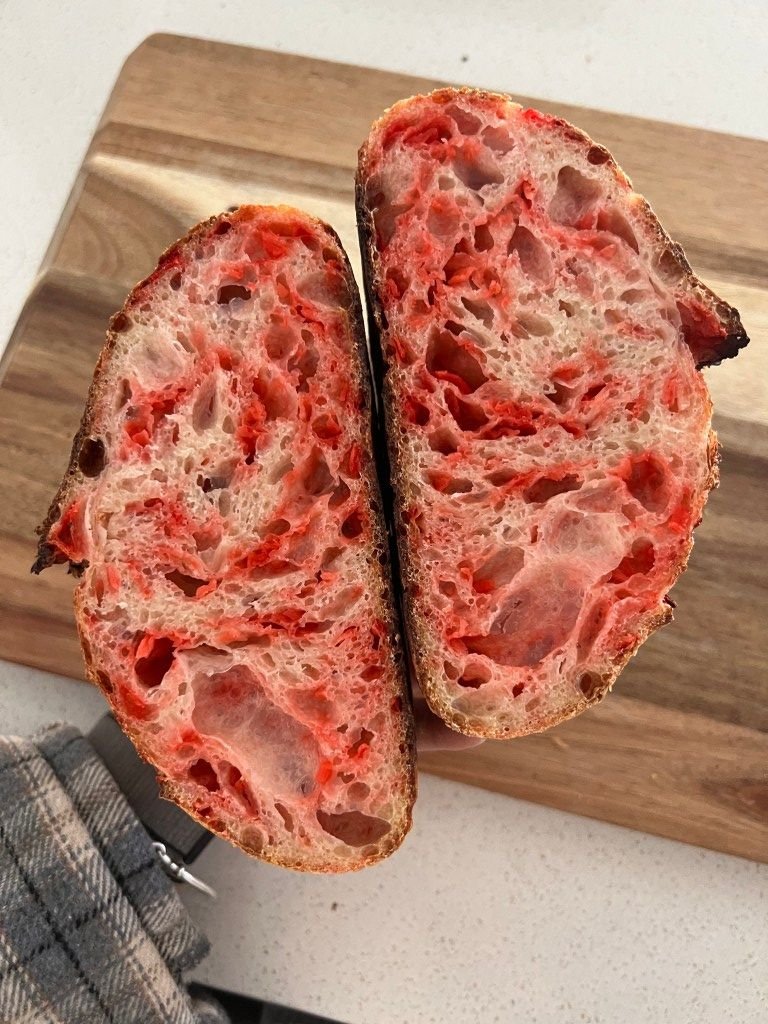
There is something truly special about slicing into a homemade sourdough loaf and discovering a beautiful pattern of juicy strawberries hidden inside. This strawberry sourdough bread combines the classic tangy flavor of naturally fermented dough with the sweetness and vibrant color of fresh strawberries. The result is a rustic artisan loaf with a crisp golden crust, a soft interior, and gorgeous red fruit throughout every slice.
Perfect for breakfast, brunch, or an afternoon snack, this bread tastes wonderful toasted with butter, served with cream cheese, or enjoyed all on its own. If you love baking sourdough and experimenting with seasonal ingredients, this recipe is a delicious way to try something new.
Why You Will Love This Recipe
- Naturally fermented: Sourdough starter gives the bread a subtle tang and wonderful flavor.
- Beautiful crumb: Stretching and folding the dough helps create an airy texture.
- Fresh strawberry flavor: Juicy strawberries add sweetness, color, and fruity bursts.
- Perfect for sharing: Each slice looks unique, making this loaf a lovely addition to brunch.
- No commercial yeast required: An active sourdough starter does the work.
Ingredients
For the sourdough dough
- 500 g bread flour
- 350 g water, room temperature
- 100 g active sourdough starter, bubbly and recently fed
- 10 g salt
- 200 g fresh strawberries, washed and thoroughly dried
Optional: 1–2 tablespoons sugar or honey for a slightly sweeter loaf, and 1 teaspoon lemon zest for a brighter fruit flavor.
Instructions
Step 1: Prepare the strawberries
Wash the strawberries and dry them thoroughly with a clean kitchen towel. Remove the green tops and cut the fruit into small pieces.
Fresh strawberries contain a lot of moisture, so avoid cutting them too large. If they are especially juicy, pat them dry again before adding them to the dough. You can also use freeze-dried strawberries for a more concentrated flavor and less additional moisture.
Step 2: Mix the dough
In a large mixing bowl, combine the water and active sourdough starter. Stir until the starter is mostly dispersed.
Add the bread flour and mix until no dry flour remains. The dough will feel sticky and rough, which is completely normal.
Cover the bowl and allow the dough to rest for 30–45 minutes. This resting period helps the flour absorb the water and makes the dough easier to handle.
Step 3: Add the salt
Sprinkle the salt over the dough. Gently pinch and fold the dough until the salt is evenly incorporated.
Cover the bowl and let the dough rest for another 20–30 minutes before beginning the stretch-and-fold process.
Step 4: Develop the dough
Over the next two hours, perform four sets of stretch and folds, spacing them approximately 30 minutes apart.
To do this, lift one side of the dough, stretch it upward gently, and fold it over the center. Rotate the bowl and repeat on the remaining sides.
As you work, the dough should gradually become smoother, stronger, and more elastic.
Step 5: Incorporate the strawberries
After the first two sets of stretch and folds, gently add the prepared strawberries.
Spread the dough on a lightly dampened work surface, distribute the fruit over it, and fold the dough over itself to enclose the strawberries. Handle it carefully to avoid crushing the fruit excessively.
The strawberries will release some juice during fermentation, creating the beautiful red streaks seen in the finished loaf. A little color bleeding is desirable, but avoid overmixing, which can weaken the dough.
Step 6: Bulk fermentation
Cover the dough and leave it at room temperature until it looks noticeably puffier and has increased in volume by approximately 30–50%.
Depending on room temperature and starter activity, this may take another three to five hours or longer. Watch the dough rather than relying exclusively on the clock.
Because strawberries add moisture and natural sugars, fermentation can behave differently from a plain sourdough loaf. The dough should feel airy and show bubbles along its sides, but it should still have enough strength to hold its shape.
Step 7: Shape the loaf
Lightly flour your work surface and carefully turn out the dough.
Gently shape it into a round or oval loaf, using enough tension to create a smooth outer surface without squeezing out all the air.
Place the shaped dough seam-side up in a well-floured proofing basket or a bowl lined with a floured kitchen towel.
Cover and refrigerate for 8–12 hours. This cold proof develops flavor and makes the dough easier to score.
Step 8: Bake the sourdough
Preheat your oven to 240°C (465°F), with a Dutch oven inside, for at least 30–45 minutes.
Carefully transfer the cold dough onto a piece of parchment paper. Score the top with a sharp bread lame or knife.
Place the loaf into the preheated Dutch oven, cover with the lid, and bake for 20 minutes. Remove the lid, reduce the temperature to 220°C (430°F), and bake for another 20–25 minutes, or until the crust is deeply golden brown.
Watch carefully toward the end because the fruit sugars can darken more quickly than plain sourdough.
Step 9: Cool and slice
Transfer the loaf to a wire rack and allow it to cool completely, ideally for at least two hours.
This is an important step. Cutting into warm sourdough can leave the interior gummy, especially when the loaf contains juicy fruit.
Once cooled, slice it open and admire the airy crumb and beautiful strawberry-colored pockets.
Tips for Perfect Strawberry Sourdough
Dry the fruit well. Excess surface moisture can make the dough difficult to handle.
Use an active starter. Your starter should be bubbly and reliably increase in volume after feeding.
Avoid adding too much fruit. Around 200 g of strawberries is a good starting point for 500 g of flour. Too much fruit can weaken the loaf and create wet pockets.
Do not rush fermentation. Temperature, starter strength, and fruit moisture all affect the timing.
Consider freeze-dried strawberries. They provide concentrated strawberry flavor with less moisture, making them an excellent alternative if you want a more structured crumb.
How to Serve Strawberry Sourdough
This bread is delicious in several ways. Toast a slice and spread it with salted butter for a simple breakfast. Pair it with cream cheese or mascarpone for a creamy contrast, or drizzle a little honey over warm toast for extra sweetness.
You can also use slightly stale slices to make French toast, serve them alongside yogurt and fresh berries, or turn them into a special weekend brunch treat.
For storage, keep the cooled loaf in a paper bag or bread box for up to two days. Because fresh fruit increases moisture, refrigerate any slices that become excessively moist or that you cannot finish promptly. For longer storage, slice the bread and freeze it in an airtight freezer bag for up to two months.
Frequently Asked Questions
Can I use frozen strawberries?
Yes, but thaw and drain them thoroughly before use. Pat them dry to remove excess moisture. Frozen fruit may create more color streaks and softer pockets.
Why is my bread gummy inside?
The loaf may have been sliced too early, underbaked, or made with dough that contained too much moisture. Allow the bread to cool completely and make sure it bakes thoroughly.
Can I make this bread sweeter?
Yes. Add one or two tablespoons of sugar or honey to the dough. For a dessert-style loaf, you can also add a small amount of vanilla, although too much sugar can change fermentation and browning.
Can I use all-purpose flour?
You can, but bread flour generally provides stronger gluten development and better structure for a loaf containing juicy fruit.
Final Thoughts
Homemade strawberry sourdough bread is a beautiful twist on traditional artisan sourdough. With its crisp crust, naturally fermented flavor, airy interior, and vibrant strawberry swirls, every loaf feels special.
The secret is to handle the fruit gently, allow the dough enough time to ferment, and resist slicing the bread before it has cooled. Serve it toasted for breakfast, share it at brunch, or enjoy a slice whenever you crave something rustic, fruity, and homemade.
Once you try this recipe, it may become one of your favorite seasonal sourdough experiments!

Leave a Reply