
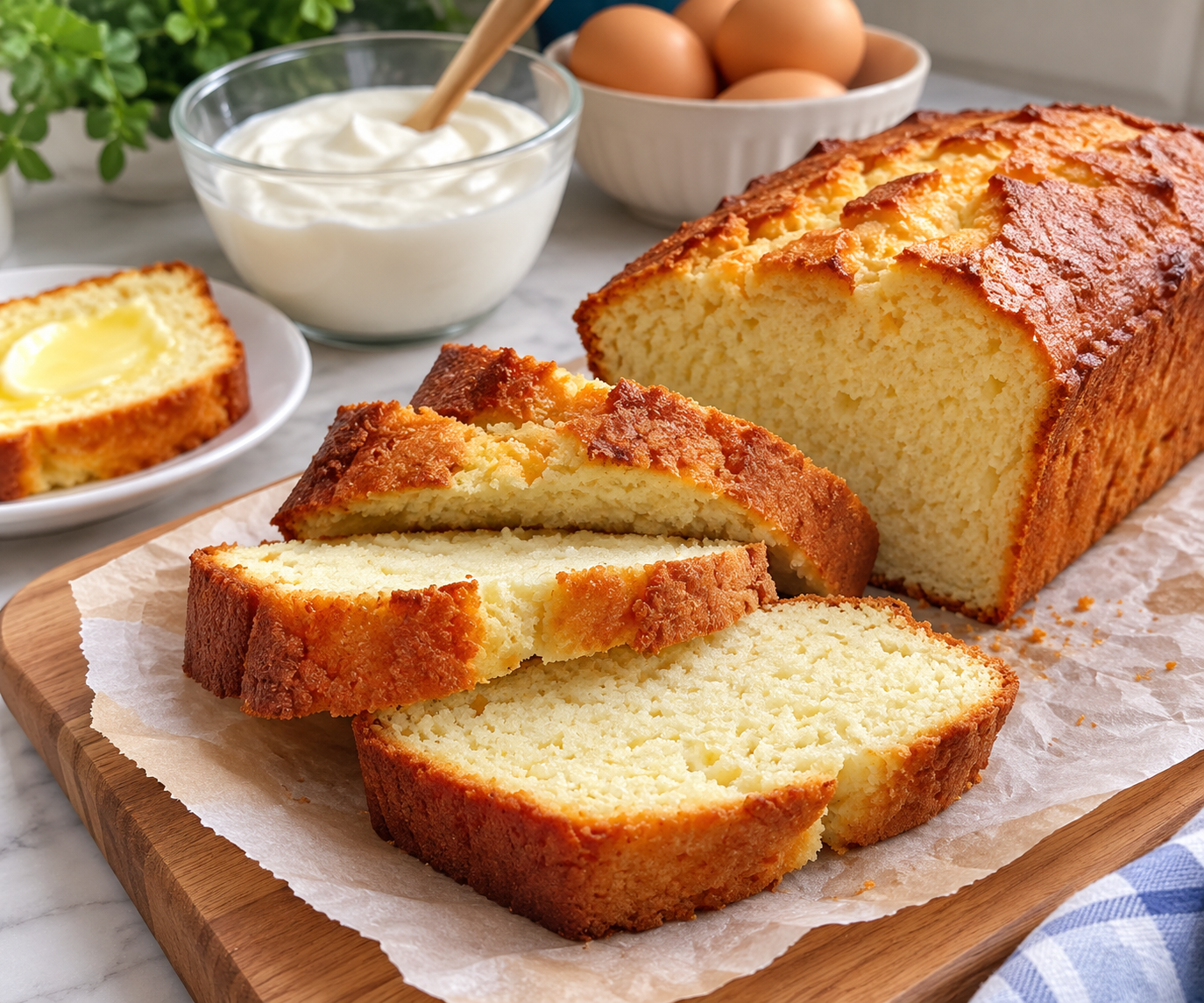
If you’re looking for a simple homemade bread that is soft, tender, and wonderfully satisfying without traditional flour, this Zero-Carb Yogurt Bread is a recipe worth saving. It has a beautiful golden crust, a light and fluffy center, and a mild flavor that makes it incredibly versatile.
Unlike traditional loaves that rely on wheat flour, this bread uses a combination of eggs, thick yogurt, and carefully selected low-carbohydrate ingredients to create a loaf that can be sliced and enjoyed in many different ways. It’s especially delicious toasted with butter, served alongside eggs, or used as the base for a simple sandwich.
The recipe is also beginner-friendly. There is no complicated kneading process, and you don’t need to wait for yeast to rise. Simply mix the ingredients, pour the batter into a loaf pan, and let the oven do the work.
A quick note: Truly zero-carb bread is difficult to achieve because yogurt and eggs naturally contain small amounts of carbohydrates. The recipe below is designed to be extremely low in carbohydrates, rather than literally zero-carb. For exact nutrition, check the labels of the ingredients you use.
Why You’ll Love This Bread
There are many reasons this yogurt bread can become a favorite in your kitchen.
First, it requires only a few basic ingredients. You don’t need specialty baking equipment or complicated techniques.
The yogurt helps create a tender texture while adding moisture to the loaf. Eggs provide structure, helping the bread hold together so you can slice it once cooled.
The finished loaf has a lovely golden exterior and a soft, slightly springy center. It’s sturdy enough for sandwiches but tender enough to enjoy with butter.
It’s also an excellent make-ahead recipe. Bake a loaf at the beginning of the week, slice it once completely cool, and store the pieces for quick breakfasts and snacks.
Ingredients
For one standard loaf, you’ll need:
- 1 cup thick plain Greek yogurt, unsweetened
- 4 large eggs
- 1½ cups finely ground almond flour
- 2 tablespoons coconut flour
- 1 teaspoon baking powder
- ½ teaspoon baking soda
- ¼ teaspoon salt
- 2 tablespoons melted butter
- 1 teaspoon vanilla extract, optional
- ½ teaspoon garlic powder for a savory version, optional
For a slightly richer loaf, you can add 2 tablespoons of cream cheese to the batter.
If you want the bread to taste more like a traditional breakfast loaf, leave out the garlic powder and add a small amount of vanilla.
Choosing Your Yogurt
The yogurt you choose makes a noticeable difference.
Use plain, unsweetened, thick Greek yogurt rather than flavored yogurt. Flavored varieties usually contain added sugar and can significantly change the carbohydrate content.
Full-fat yogurt generally produces a richer and more tender loaf, while low-fat yogurt can also work.
Make sure the yogurt isn’t excessively watery. If yours has a lot of liquid, strain it through a fine-mesh strainer or cheesecloth for a little while before using it.
How to Make Zero-Carb Yogurt Bread
1. Prepare the loaf pan
Preheat your oven to 350°F (175°C).
Grease a standard loaf pan with butter or cooking spray. For easier removal, line the pan with parchment paper, leaving some paper hanging over the sides.
This makes it much easier to lift the finished bread from the pan.
2. Mix the wet ingredients
In a large mixing bowl, add the Greek yogurt, eggs, and melted butter.
Whisk everything together until the mixture is smooth and well combined.
If you’re making a slightly sweeter breakfast-style loaf, add the vanilla extract at this stage.
For a savory loaf, you can add garlic powder instead.
3. Combine the dry ingredients
In another bowl, whisk together the almond flour, coconut flour, baking powder, baking soda, and salt.
Mix thoroughly so the leavening agents are evenly distributed.
This helps the bread rise more consistently during baking.
4. Combine wet and dry mixtures
Gradually add the dry ingredients to the yogurt mixture.
Stir gently with a spatula until everything is incorporated.
Don’t overmix the batter. Once there are no obvious pockets of dry flour remaining, stop stirring.
The batter should be thick but spreadable.
If it seems unusually thick, allow it to sit for 2–3 minutes. Coconut flour absorbs liquid quickly, and the mixture will naturally become thicker as it rests.
5. Transfer to the pan
Pour the batter into your prepared loaf pan.
Use a spatula to smooth the top.
Gently tap the pan against the countertop once or twice to remove any large air pockets.
For a beautiful golden crust, brush the top lightly with a little melted butter.
6. Bake
Place the loaf in the preheated oven and bake for approximately 35–45 minutes.
The exact cooking time will depend on the size and material of your loaf pan.
The bread should be golden brown on top and firm in the center.
Insert a toothpick into the middle. If it comes out mostly clean with only a few moist crumbs, the bread is ready.
If the top becomes brown before the center has finished cooking, loosely cover the loaf with aluminum foil and continue baking.
7. Cool completely
This step is extremely important.
Remove the bread from the oven and allow it to cool in the pan for about 10 minutes.
Then carefully lift it out and place it on a wire rack.
Allow it to cool completely before slicing.
Because the bread is made without traditional wheat flour, its structure continues to set as it cools. Cutting it while it’s still hot can cause the slices to crumble or appear slightly wet in the center.
How to Get the Best Texture
For the softest loaf, don’t overbake it.
Overbaking removes too much moisture and can make almond-flour bread dry.
Also, make sure your almond flour is finely ground. Coarse almond meal can produce a heavier, more crumbly texture.
Using room-temperature eggs and yogurt can also help everything combine more evenly.
If you want a slightly taller loaf, beat the eggs thoroughly before combining them with the yogurt. The additional air can contribute to a lighter texture.
Sweet or Savory?
One of the best things about this bread is how easily you can change its flavor.
For a breakfast loaf
Add:
- Vanilla extract
- Cinnamon
- A little low-carb sweetener
- Unsweetened shredded coconut
Serve with butter or cream cheese.
For a savory loaf
Add:
- Garlic powder
- Italian herbs
- Black pepper
- Shredded cheddar
- Chopped parsley
You can even fold a small amount of cooked spinach into the batter for extra flavor and color.
Ways to Serve Yogurt Bread
Once sliced, this bread can be used in countless ways.
Toast a slice and top it with butter and scrambled eggs for breakfast.
Use two slices to make a grilled cheese sandwich.
Top toasted bread with avocado, boiled eggs, or cream cheese.
For a quick snack, simply warm a slice and spread it with butter.
You can also serve it alongside soups, salads, grilled chicken, or roasted vegetables.
The mild flavor makes it an excellent accompaniment to both sweet and savory foods.
Storage Instructions
Allow the loaf to cool completely before storing.
Place it in an airtight container or wrap it tightly and refrigerate.
It should stay fresh for several days in the refrigerator.
For longer storage, slice the bread before freezing. Place parchment paper between individual slices so they don’t stick together.
When you’re ready to eat, simply toast a frozen slice or allow it to thaw before reheating.
To restore the best texture, a toaster or air fryer works particularly well.
Frequently Asked Questions
Can I use regular yogurt?
You can, but Greek yogurt is preferable because it contains less liquid and produces a thicker batter. If using regular yogurt, you may need to strain it first.
Can I leave out the coconut flour?
Coconut flour helps absorb moisture and improve the structure. Replacing it with almond flour may require adjusting the quantity, so it’s best to keep it in the recipe for the intended texture.
Why did my bread sink?
A loaf can sink if the center hasn’t fully cooked, if too much liquid was added, or if the oven door was opened too early. Make sure the center is completely set before removing the bread.
Can I add cheese?
Absolutely. Shredded cheddar, mozzarella, Parmesan, or Monterey Jack can turn this into a delicious savory cheese bread.
Final Thoughts
This Zero-Carb Yogurt Bread is an easy alternative to conventional bread when you’re trying to keep carbohydrates very low. With thick Greek yogurt, eggs, almond flour, and a few simple pantry ingredients, you can create a golden loaf with a tender interior and plenty of versatility.
The most important tricks are choosing thick yogurt, measuring the dry ingredients accurately, avoiding overmixing, and allowing the loaf to cool completely before slicing.
Whether you toast it for breakfast, use it for sandwiches, or serve it beside dinner, this homemade loaf is an easy recipe to keep on hand.
Soft, golden, satisfying, and simple to make—this yogurt bread is a delicious way to enjoy homemade bread while keeping carbohydrates as low as possible.

