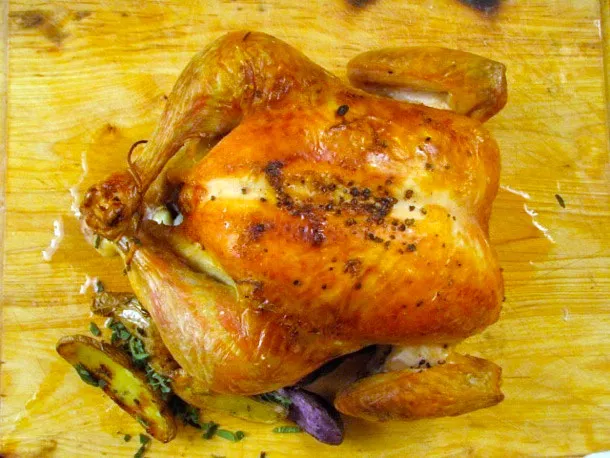
Baked whole chicken with spices on pan
Prep Time: 20 minutes | Marinating Time: 1–4 hours | Cooking Time: 1 hour 15 minutes–1 hour 45 minutes | Servings: 4–6
Introduction
Nothing makes a homemade meal feel more special than a beautifully roasted whole chicken. With its golden-brown skin, juicy meat, and delicious aroma, roast chicken is a timeless favorite for family dinners, weekend gatherings, and festive occasions.
The chicken in the picture has a rich, golden exterior, flavorful seasoning, and roasted vegetables arranged around it. The best part is that you can recreate a similar dish in your own kitchen using simple ingredients and a few easy techniques.
The secret to a delicious roast chicken is combining the right seasonings with proper cooking temperature and resting time. Butter or oil helps the skin brown, while garlic, herbs, and spices add flavor to the meat. Roasting the chicken with vegetables also creates a complete meal with very little extra effort.
In this recipe, you will learn how to prepare, season, roast, and serve a whole chicken that looks beautiful and tastes delicious.
Ingredients for Golden Roasted Chicken
Whole Pasture Raised Chicken – Hidden Creek Farm
For this recipe, you will need:
For the chicken
- 1 whole chicken, approximately 1.5–2 kg
- 3 tablespoons olive oil or melted butter
- 4 garlic cloves, minced
- 1 teaspoon salt, or to taste
- 1 teaspoon black pepper
- 1 teaspoon paprika
- 1 teaspoon dried thyme
- 1 teaspoon dried rosemary
- 1 teaspoon onion powder
- 1 tablespoon lemon juice
- 1 teaspoon dried oregano (optional)
For the vegetables
- 4 medium potatoes, cut into chunks
- 2 carrots, cut into thick pieces
- 1 red onion, cut into wedges
- 1 tablespoon olive oil
- A pinch of salt and black pepper
- Fresh parsley or rosemary for garnish
These ingredients create a savory, aromatic roast chicken with a beautiful color. You can adjust the herbs and spices according to your personal taste.
Step 1: Prepare the Chicken
Cooking tips, recipes, and answers about chicken
Begin by removing the chicken from its packaging and checking the cavity for any giblets or other contents that need to be removed.
Do not wash raw chicken, as splashing water can spread harmful bacteria around your kitchen. Instead, pat the chicken dry with paper towels and discard them immediately.
Drying the skin is an important step because excess moisture can prevent it from becoming crisp and golden during roasting.
Place the chicken in a roasting pan or on a clean tray. If you have time, refrigerate it uncovered for a few hours to help dry the skin further, keeping it away from ready-to-eat foods.
Step 2: Prepare the Flavorful Marinade
Capón al horno sin relleno – Fácil y muy jugoso
In a small bowl, combine the olive oil or melted butter, minced garlic, salt, black pepper, paprika, thyme, rosemary, onion powder, oregano, and lemon juice.
Mix everything until you have a smooth, aromatic seasoning mixture.
Rub the mixture evenly over the entire chicken, including the breast, legs, wings, and sides. If possible, gently loosen the skin over the breast and spread a little of the mixture underneath without tearing the skin.
Seasoning under the skin helps flavor the meat directly, while the oil and spices on the outside contribute to the beautiful roasted color.
For the best flavor, refrigerate the seasoned chicken for 1–4 hours. If you are short on time, you can roast it immediately after seasoning.
Always marinate raw chicken in the refrigerator rather than leaving it at room temperature.
Step 3: Prepare the Vegetables
Vibrant mix of potatoes, carrots, red onions, and garlic, seasoned with herbs and pepper.
Wash and prepare the potatoes, carrots, and red onion. Cut them into reasonably even pieces so they cook at a similar rate.
Place the vegetables in a roasting pan and toss them with olive oil, salt, black pepper, and a little rosemary.
Arrange them in a single layer as much as possible. Place the chicken on a roasting rack above the vegetables if you have one, or position it directly over the vegetables if your pan allows enough airflow.
As the chicken cooks, its juices and seasonings will flavor the vegetables, creating a delicious side dish alongside the main course.
If you prefer crispier vegetables, avoid overcrowding the pan and turn the vegetables once during cooking.
Step 4: Preheat the Oven
Preheat your oven to 220°C (425°F).
Starting at a relatively high temperature helps the chicken’s skin begin browning. Once the chicken has started roasting, you can reduce the heat to allow the meat to cook evenly without burning the exterior.
Make sure the oven has fully preheated before placing the chicken inside.
Position the roasting pan on the middle rack to encourage even heat circulation.
Step 5: Roast the Chicken
Consejos para el horno: cómo lograr una cocción perfecta siempre | PEKIS Recetas
Place the chicken breast-side up in the roasting pan. Roast at 220°C (425°F) for approximately 15 minutes, then reduce the oven temperature to 190°C (375°F).
Continue roasting until the chicken is fully cooked. A 1.5–2 kg chicken may take roughly 1 hour 15 minutes to 1 hour 45 minutes in total, depending on its size, shape, starting temperature, and oven.
Avoid opening the oven too frequently because this releases heat and can extend the cooking time.
If the skin becomes dark before the chicken is cooked through, loosely cover the breast area with foil.
The most reliable way to check doneness is with a food thermometer. Insert it into the thickest part of the breast and the innermost part of the thigh without touching bone. Both areas should reach at least 74°C (165°F).
Do not rely on the skin color alone to determine whether the chicken is cooked.
Step 6: Baste for Extra Flavor
During roasting, you can spoon a little of the pan juices over the chicken once or twice. This adds flavor and helps the surface brown attractively.
However, basting is optional. Opening the oven too often can slow cooking, and it does not guarantee crispier skin.
For the crispiest finish, make sure the chicken was dried thoroughly before roasting and avoid covering it for the entire cooking process.
If you want a deeper golden color, increase the oven temperature slightly toward the end of cooking, provided the chicken is already close to being done and the skin is not burning.
Keep a close eye on it during this final stage.
Step 7: Rest Before Carving
Rotisserie-Style Roast Chicken
Once the chicken reaches the safe internal temperature, remove it from the oven and transfer it to a clean cutting board.
Let it rest for approximately 15–20 minutes before carving. Resting allows the juices to redistribute, helping the meat remain moist and flavorful.
Avoid cutting into the chicken immediately, as much of the juice can escape onto the cutting board.
While the chicken rests, check that the vegetables are tender. If they need additional browning, return them to the oven while the chicken rests, using a separate tray if necessary.
Carve the chicken into breasts, thighs, drumsticks, and wings using a sharp knife. Arrange the pieces on a serving platter and garnish with fresh parsley or rosemary.
Tips for the Best Roasted Chicken
- Dry the skin thoroughly: This helps achieve a crisp, golden exterior.
- Season under the skin: It adds flavor to the breast meat.
- Use a thermometer: Check that the thickest breast and innermost thigh reach 74°C (165°F).
- Avoid overcrowding: Give the chicken and vegetables enough space for heat to circulate.
- Rest before carving: Allow 15–20 minutes for juicier meat.
- Adjust the seasoning: Add chili powder for heat or lemon zest for a fresher flavor.
- Save leftovers safely: Refrigerate cooked chicken within two hours in covered containers and use within 3–4 days.
What to Serve with Roasted Chicken
Roasted Chicken with Potatoes and Vegetables
Recette de poulet rôti croustillant au four en 1 heure – SwipEat
Butter-Lemon Roasted Chicken with Herbs Jus | Christopher Kimball’s Milk Street | Recipes, TV and Cooking Tips
Roasted chicken pairs beautifully with a wide variety of side dishes. The easiest option is to serve it with the potatoes and carrots cooked in the same roasting pan.
You can also serve it with creamy mashed potatoes, steamed vegetables, fresh green salad, garlic bread, or rice. A simple gravy made from the pan drippings can add even more flavor.
For a fresh finishing touch, squeeze a little lemon juice over the carved chicken and sprinkle it with chopped parsley.
This dish is suitable for Sunday lunches, family dinners, special occasions, and holiday meals. You can also use leftover meat in sandwiches, wraps, salads, and soups.
Frequently Asked Questions
- How do I make roast chicken skin crispy?
Dry the skin thoroughly before seasoning, use enough oil or butter, and roast uncovered for most of the cooking time.
- Can I prepare the chicken in advance?
Yes. Season it and refrigerate it covered for several hours or overnight. For better skin browning, you can uncover it during the final few hours in the refrigerator, keeping it safely chilled.
3. How do I know when the chicken is ready?
Use a food thermometer to confirm that both the thickest breast and innermost thigh reach at least 74°C (165°F).
4. Can I use different vegetables?
Absolutely. Sweet potatoes, parsnips, onions, and other roasting vegetables work well. Cut them into similar-sized pieces and adjust cooking times as needed.
Conclusion
Homemade roasted chicken is a classic dish that combines simple ingredients with wonderful flavor. With garlic, butter or olive oil, aromatic herbs, and the right roasting technique, you can prepare a chicken with beautifully browned skin and tender, juicy meat.
The key is to dry the skin, season generously, roast at the right temperature, check the internal temperature for safety, and allow the chicken to rest before carving.
Serve it with roasted vegetables and your favorite sides for a satisfying meal that everyone can enjoy. Once you master this basic recipe, you can experiment with different herbs, spices, and marinades to create your own signature roasted chicken.
Enjoy your homemade golden roast chicken fresh from the oven!

Leave a Reply