
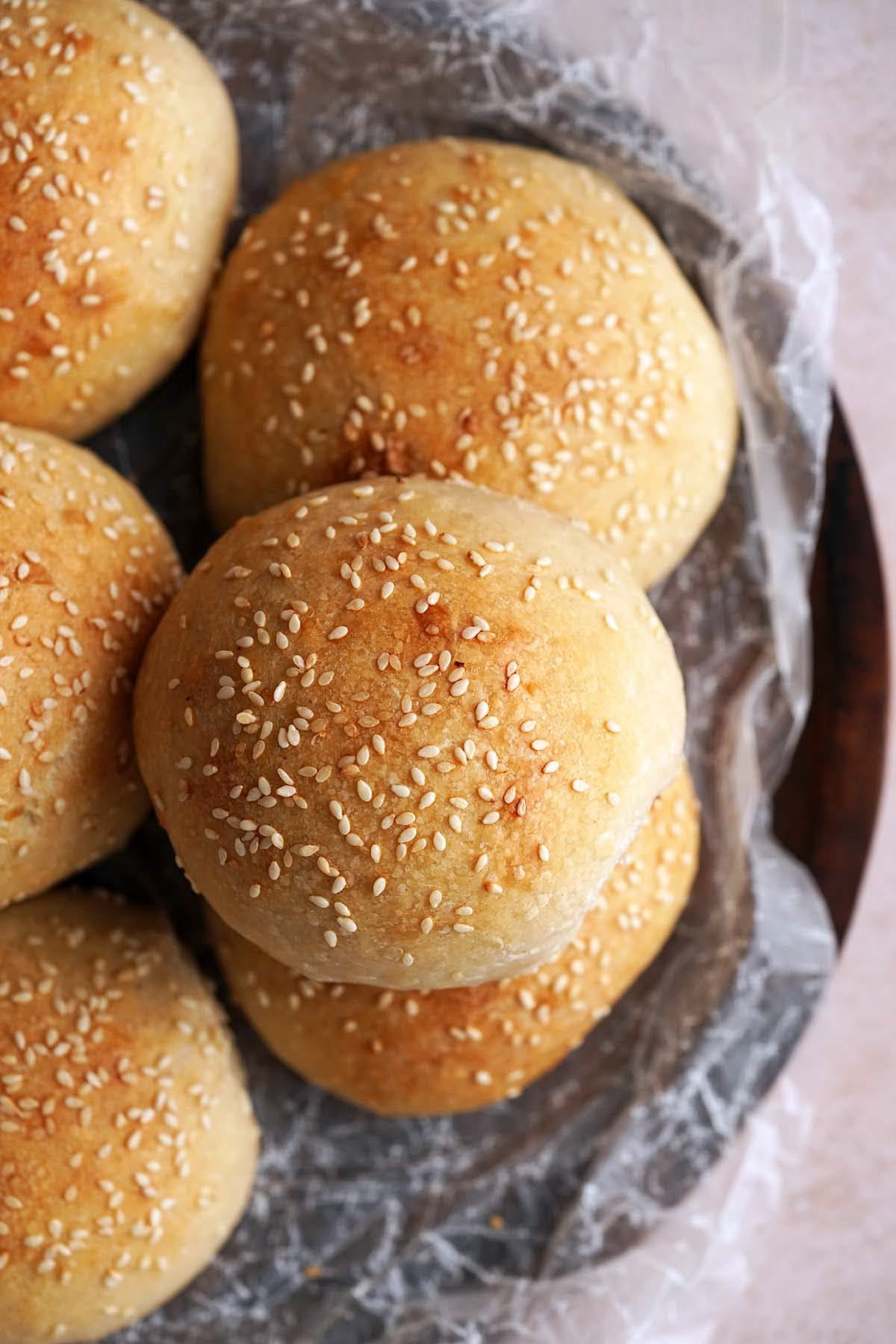
Soft Sourdough Sandwich Rolls
Soft, fluffy, and beautifully golden, these Soft Sourdough Sandwich Rolls are a delicious homemade alternative to store-bought bread. They have a tender crumb, a lightly chewy crust, and the subtle tangy flavor that makes sourdough so special.
These rolls are perfect for sandwiches, burgers, breakfast rolls, lunchbox meals, or simply enjoying warm with butter. They are versatile enough to pair with both savory and sweet fillings, making them a recipe worth keeping in your regular baking rotation.
The dough is enriched with a small amount of butter, milk, and honey, which helps create a soft texture and pleasant flavor. The sourdough starter provides fermentation and depth of flavor, while a little patience gives the rolls their light and airy structure.
Why You’ll Love These Sourdough Sandwich Rolls
There are many reasons to make these rolls at home:
- Soft and fluffy texture
- Delicious homemade sourdough flavor
- Great for sandwiches and burgers
- Easy to customize
- Freezer-friendly
- Perfect for meal preparation
- Made with simple ingredients
- Delicious fresh from the oven
The rolls are also a wonderful way to use an active sourdough starter. If you regularly maintain a starter, this recipe gives you another reason to keep it active.
Ingredients
For approximately 10–12 sandwich rolls, you’ll need:
For the Dough
- 100 grams active sourdough starter
- 300 grams bread flour
- 100 grams all-purpose flour
- 200 grams lukewarm milk
- 1 large egg
- 30 grams unsalted butter, softened
- 25 grams honey
- 8 grams fine sea salt
For the Topping
- 1 egg, beaten, for egg wash
- Sesame seeds, optional
- Poppy seeds, optional
- Rolled oats, optional
You can skip the egg wash if you prefer a softer, less shiny appearance.
Choosing the Right Sourdough Starter
A strong, active sourdough starter is important for achieving fluffy rolls.
Your starter should look bubbly and active and should have increased noticeably in volume after feeding.
If your starter is sluggish, the dough may take much longer to ferment.
For this recipe, use your starter when it is active and ready to bake with rather than using one that has been sitting unused for several days.
How to Make Soft Sourdough Sandwich Rolls
Step 1: Combine the Ingredients
Add the active sourdough starter, lukewarm milk, egg, and honey to a large mixing bowl.
Stir until the ingredients are reasonably well combined.
Add the bread flour and all-purpose flour.
Mix until a rough dough forms and there are no obvious dry patches.
Cover the bowl and let the dough rest for approximately 20–30 minutes.
This short rest gives the flour time to hydrate.
Step 2: Add Butter and Salt
Add the softened butter and salt to the dough.
Begin kneading gently.
At first, the dough may feel sticky and messy, but it should gradually become smoother as the butter incorporates.
You can knead by hand or use a stand mixer fitted with a dough hook.
If kneading by hand, work the dough for several minutes until it becomes smoother and more elastic.
Avoid adding excessive flour because that can make the finished rolls heavy.
Step 3: Develop the Dough
Continue kneading until the dough becomes soft, elastic, and slightly tacky.
A well-developed dough should stretch without immediately tearing.
You can also perform a simple windowpane test by gently stretching a small piece of dough. If it stretches thin enough for light to pass through without tearing quickly, the gluten structure is developing well.
Don’t worry if your dough isn’t perfect immediately. Fermentation and folding will continue developing strength.
Step 4: Bulk Fermentation
Place the dough in a lightly greased bowl.
Cover it and let it ferment at room temperature.
The exact time depends on your starter strength and room temperature.
Instead of relying only on the clock, look for signs of fermentation. The dough should become noticeably puffier, smoother, and lighter, with some air bubbles developing.
During the first part of fermentation, perform a few gentle stretch-and-folds.
Grab one side of the dough, stretch it upward, and fold it toward the center. Turn the bowl and repeat on the remaining sides.
A few rounds of folds can help strengthen the dough without requiring aggressive kneading.
Step 5: Divide the Dough
Once bulk fermentation is complete, transfer the dough to a lightly floured surface.
Divide it into 10–12 equal pieces.
For consistent rolls, weighing each piece with a kitchen scale is helpful.
Take one portion and gently pull the edges toward the center.
Turn it over and cup your hand around it, moving it gently across the work surface to create surface tension.
Repeat with the remaining pieces.
Step 6: Shape the Rolls
Place the shaped rolls on a parchment-lined baking tray.
Leave enough space between them for expansion.
For sandwich rolls, you can place them slightly closer together if you want softer sides.
Cover the tray loosely with plastic wrap or a clean kitchen towel.
Step 7: Final Proof
Allow the rolls to rise again.
The final proof can take several hours depending on temperature and starter activity.
The rolls should look noticeably puffy and soft.
Don’t rush this step. Under-proofed dough can produce dense rolls.
At the same time, avoid allowing the rolls to become excessively puffy because over-proofing can make them collapse during baking.
A gentle fingertip press can help you judge readiness. The dough should slowly spring back rather than immediately returning to its original shape.
Step 8: Prepare for Baking
Preheat your oven to 375°F (190°C).
Once the rolls have finished their final proof, brush their tops gently with beaten egg.
Sprinkle with sesame seeds, poppy seeds, or oats if desired.
For a classic sandwich-roll appearance, sesame seeds are an excellent choice.
Step 9: Bake
Place the rolls in the preheated oven.
Bake for approximately 20–25 minutes, or until the tops are beautifully golden brown.
The exact baking time can vary depending on the size of the rolls and your oven.
Try not to open the oven repeatedly because this can affect the temperature and baking process.
Step 10: Cool
Remove the rolls from the oven and place them on a cooling rack.
Allow them to cool before slicing.
Although it’s tempting to cut into them immediately, allowing them to cool helps the interior finish setting properly.
Once cooled, slice the rolls horizontally and fill them with your favorite ingredients.
Tips for Extra-Soft Rolls
Use Milk
Milk helps create a tender crumb and gives the rolls a richer flavor.
Don’t Add Too Much Flour
Sourdough dough can feel sticky during mixing. Adding too much flour may produce dense rolls.
Instead, give the dough time to develop strength.
Knead Properly
Good gluten development helps the rolls hold their shape and rise beautifully.
Give the Dough Enough Time
Sourdough fermentation is naturally slower than commercial yeast baking. The timing can vary considerably depending on temperature and starter strength.
Watch the dough rather than following the clock blindly.
Don’t Skip the Final Proof
The final proof is important for creating light, airy rolls.
Serving Ideas
These soft sourdough rolls are incredibly versatile.
Use them for:
- Turkey sandwiches
- Chicken salad sandwiches
- Grilled chicken burgers
- Beef burgers
- Egg sandwiches
- Tuna salad
- Cheese and vegetable sandwiches
- Breakfast sandwiches
You can also toast them and spread them with butter, cream cheese, or nut butter.
For a simple breakfast, fill a warm roll with scrambled eggs and cheese.
For lunch, add grilled chicken, lettuce, cucumber, tomato, and a light dressing.
How to Store the Rolls
Once completely cooled, place the rolls in an airtight container or bread bag.
They can be kept at room temperature for a few days.
Avoid storing homemade bread in the refrigerator unless necessary because refrigeration can cause bread to become stale more quickly.
For longer storage, freezing is an excellent option.
Freezing Instructions
Allow the rolls to cool completely.
Place them in a freezer-safe bag or airtight container.
Freeze them for up to several weeks for best quality.
When you’re ready to use them, remove the desired number of rolls and allow them to thaw at room temperature.
You can warm thawed rolls in the oven for a few minutes to refresh their texture.
Easy Variations
Garlic Herb Rolls
Add garlic powder, dried oregano, and parsley to the dough.
Cheesy Sandwich Rolls
Mix a small amount of shredded cheese into the dough or sprinkle cheese over the tops before baking.
Whole-Wheat Rolls
Replace a portion of the white flour with whole-wheat flour. You may need to adjust the liquid slightly.
Honey Oat Rolls
Add rolled oats to the dough and sprinkle additional oats on top before baking.
Everything Rolls
Top the rolls with an everything-bagel seasoning blend before baking.
Frequently Asked Questions
Can I use all-purpose flour?
Yes. Bread flour provides extra structure, but all-purpose flour can also work.
Why are my rolls dense?
Dense rolls can result from weak starter activity, insufficient fermentation, under-proofing, or adding too much flour.
Can I make the dough overnight?
Yes. A longer, cooler fermentation can be convenient and can develop additional sourdough flavor. Keep an eye on the dough to avoid over-fermentation.
Can I make smaller rolls?
Absolutely. Divide the dough into smaller portions, but remember that smaller rolls may require less baking time.
Can I skip the egg wash?
Yes. The rolls will still bake successfully, but the tops may be less shiny and golden.
Final Thoughts
These Soft Sourdough Sandwich Rolls are a fantastic homemade bread recipe for anyone who enjoys soft, fluffy rolls with a subtle sourdough tang. The enriched dough creates a tender texture, while proper fermentation gives the rolls their characteristic flavor and structure.
Once you understand the basic process—mixing, kneading, bulk fermentation, shaping, final proofing, and baking—you can confidently customize the recipe with herbs, cheese, oats, or seeds.
Fresh from the oven, these rolls are soft, fragrant, and golden. Once cooled, they make excellent sandwich bread for breakfast, lunch, or dinner.
With a little patience and an active sourdough starter, you can make bakery-style sandwich rolls right in your own kitchen. 🥪🍞✨
