
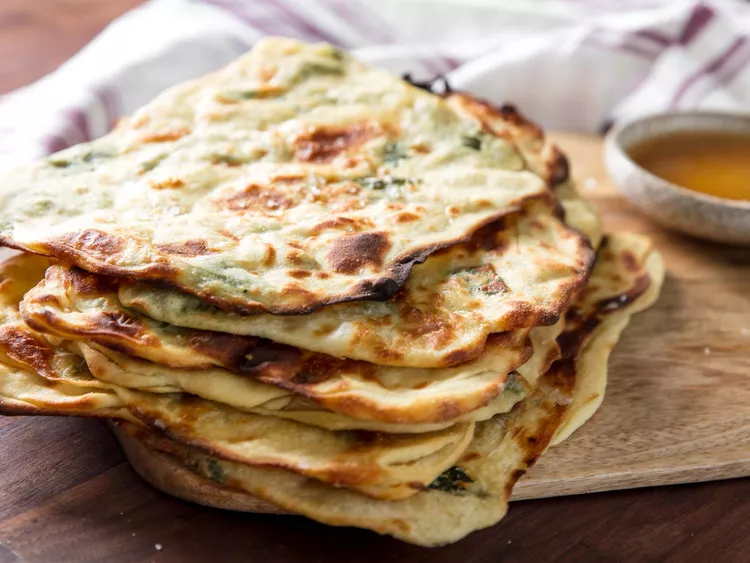
There is something incredibly comforting about a stack of warm, golden flatbreads fresh from the pan. Crispy around the edges, soft and tender in the middle, with beautiful flaky layers and little pockets of herbs throughout—this homemade Garlic & Herb Layered Flatbread is the kind of recipe that makes an ordinary meal feel special.
These flatbreads are inspired by traditional pan-cooked layered breads, but the recipe is simple enough to make at home without any complicated equipment. The dough is soft and easy to work with, while a mixture of butter, garlic, and fresh herbs gives every layer a delicious savory flavor. As the breads cook, the surface becomes golden brown with irresistible crispy spots while the inside stays soft and chewy.
They are perfect for serving alongside soups, curries, grilled chicken, roasted vegetables, eggs, or simply enjoying warm with a little butter. You can also make them ahead of time and reheat them whenever you want something warm and homemade.
𝓡𝓮𝓬𝓲𝓹𝓮 ✨
Ingredients
For the dough:
- 3 cups all-purpose flour
- 1 teaspoon salt
- 1 teaspoon sugar
- 2 tablespoons olive oil or melted butter
- 1 cup warm water, approximately
- 2 tablespoons plain yogurt
For the garlic and herb filling:
- 4 tablespoons melted butter
- 3 cloves garlic, finely minced
- 2–3 tablespoons fresh cilantro, finely chopped
- 2 tablespoons green onions, finely chopped
- 1 tablespoon fresh parsley, chopped
- ½ teaspoon black pepper
- ½ teaspoon red chili flakes, optional
For cooking:
- 2–3 tablespoons butter or oil
Step 1: Make the Dough
Start by adding the flour to a large mixing bowl. Add salt and sugar and mix everything together.
Make a well in the center and add the yogurt and olive oil or melted butter. Slowly pour in the warm water while mixing with your hand or a wooden spoon.
You may not need all the water, so add it gradually. The goal is to make a soft dough that is smooth and slightly elastic without being extremely sticky.
Once the dough comes together, transfer it to a lightly floured surface and knead for about 6–8 minutes. Kneading is important because it develops the gluten and gives the flatbread its soft, stretchy texture.
When the dough becomes smooth, place it in a lightly greased bowl. Cover it with a clean kitchen towel or plastic wrap and let it rest for 30–45 minutes.
Don’t skip the resting time. It allows the gluten to relax, making the dough much easier to roll and stretch.
Step 2: Prepare the Garlic Herb Butter
While the dough is resting, prepare the filling.
In a small bowl, combine melted butter, minced garlic, chopped cilantro, green onions, parsley, black pepper, and red chili flakes if you’re using them.
Mix well and set aside.
The garlic butter should be fragrant and flavorful. You can also add a pinch of dried oregano or a little cumin if you want to give the flatbread a slightly different flavor.
Step 3: Divide the Dough
Once the dough has rested, lightly knead it for another minute.
Divide it into 6–8 equal portions, depending on how large you want your flatbreads.
Roll each portion into a smooth ball. Keep the dough balls covered while working so they don’t dry out.
Take one dough ball and place it on a lightly floured surface. Roll it into a thin circle or oval.
It doesn’t have to be perfectly shaped. In fact, slightly uneven edges give homemade flatbreads that beautiful rustic appearance.
Step 4: Add the Filling and Create Layers
Brush a generous layer of the garlic herb butter over the rolled dough.
For extra flaky layers, lightly sprinkle a little flour over the butter. Fold the dough into layers or gently roll it up into a log.
Then coil the log into a spiral and tuck the end underneath.
Let the shaped dough rest for about 5 minutes before rolling it again. This small resting period makes the dough easier to flatten without springing back.
Gently roll the spiral into a flatbread about ⅛–¼ inch thick.
Don’t press too aggressively because you want to keep some of those beautiful layers inside.
Repeat with the remaining dough balls.
Step 5: Cook the Flatbread
Heat a heavy skillet, cast-iron pan, or nonstick frying pan over medium heat.
Place one flatbread onto the hot pan and cook for about 1–2 minutes, or until small bubbles begin appearing on the surface and the bottom develops golden-brown spots.
Flip it over and brush the cooked side lightly with butter.
Continue cooking the other side until golden and lightly crisp.
Flip once more if necessary and cook until the flatbread is completely cooked through.
The heat should be medium rather than extremely high. If the pan is too hot, the outside may burn before the inside has finished cooking.
Continue cooking all the flatbreads, adding a small amount of butter or oil to the pan when needed.
The Secret to Soft, Flaky Flatbread
The secret is actually a combination of several small things.
First, don’t make the dough too dry. A soft dough creates a much more tender flatbread.
Second, give the dough enough time to rest. Resting makes it easier to roll and helps prevent the bread from becoming tough.
Third, don’t be afraid of the butter. The butter between the layers helps create that wonderful flaky texture.
Finally, avoid overcooking the flatbread. You want golden-brown patches and crisp edges, but the center should remain soft.
How to Serve
These garlic and herb flatbreads are incredibly versatile.
Serve them hot with a bowl of creamy soup, lentil curry, chicken curry, or vegetable stew. They are also delicious with grilled meats and roasted vegetables.
For breakfast, serve one alongside scrambled eggs, an omelet, or a fried egg.
For a simple snack, tear the warm flatbread into pieces and serve it with yogurt, garlic dip, hummus, or your favorite chutney.
You can even brush the finished flatbread with a little melted butter and sprinkle fresh herbs over the top just before serving. The aroma is absolutely irresistible.
Storage & Reheating
If you have leftovers, allow the flatbreads to cool completely before storing them.
Place parchment paper between each flatbread and keep them in an airtight container or zip-top bag. They can be refrigerated for about 3–4 days.
To reheat, place them in a dry skillet over medium-low heat for a couple of minutes on each side. You can brush them with a tiny amount of butter to bring back their softness.
They can also be frozen. Wrap individual flatbreads tightly and place them in a freezer-safe bag. When you’re ready to eat them, reheat directly in a skillet.
Easy Variations
This recipe is easy to customize.
For a cheesy version, add shredded mozzarella or cheddar between the layers.
For extra spice, add chopped green chilies, chili flakes, or a pinch of cayenne pepper.
For a more aromatic version, add fresh mint, dill, or extra cilantro.
You can also make a simple cheese and herb flatbread by combining mozzarella with parsley, green onion, and garlic butter.
If you prefer a richer flavor, replace some of the butter with ghee.
Final Thoughts
Homemade Garlic & Herb Layered Flatbread is one of those recipes that looks impressive but is surprisingly simple once you get the hang of working with the dough. The golden, slightly crisp exterior, soft center, buttery layers, and fresh herbs make every bite incredibly satisfying.
There is also something special about bringing a warm stack of homemade flatbreads to the table. Their rustic appearance makes them feel homemade in the best possible way, and the smell of garlic and butter filling the kitchen is enough to make everyone hungry.
Whether you’re serving them with a hearty curry, making a cozy weekend breakfast, or simply looking for something delicious to enjoy with tea, these flatbreads are worth making.
Warm, buttery, flaky, and packed with garlicky herb flavor—this is the kind of homemade recipe you’ll want to make again and again. 🤍🥖

