
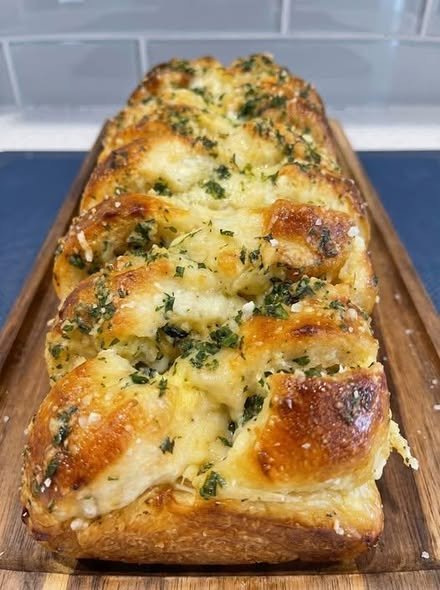
Few things are as inviting as a loaf of warm, golden bread covered with melted cheese, fragrant garlic, and fresh herbs. This Cheesy Garlic Herb Sourdough Pull-Apart Bread takes homemade sourdough to another level by combining a crisp, beautifully browned crust with soft, fluffy pieces that are filled with buttery garlic flavor and gooey cheese.
The loaf in the photo has a gorgeous rustic appearance, with individual sections that can be pulled apart and enjoyed straight from the loaf. The combination of golden bread, melted cheese, garlic, and herbs makes it perfect for family dinners, weekend baking, parties, or simply serving as a comforting snack.
If you already enjoy making sourdough bread, this recipe is a fun way to turn your regular loaf into something extra special.
Why You’ll Love This Recipe
This cheesy garlic sourdough bread has everything you want in a homemade bread recipe:
- A crisp golden-brown crust
- A soft and airy interior
- Plenty of melted cheese
- Rich garlic butter flavor
- Fresh or dried herbs
- Beautiful pull-apart pieces
- A deliciously rustic appearance
- Perfect for sharing
- Great alongside soups, pasta, and salads
It is also a wonderful way to use your sourdough starter when you want something more exciting than a traditional loaf.
Ingredients
For the Sourdough
- 1 cup active sourdough starter
- 1 ¼ cups lukewarm water
- 3 ½ cups bread flour
- 1 teaspoon salt
- 1 tablespoon olive oil
For the Garlic Butter
- ½ cup unsalted butter, softened
- 4–5 garlic cloves, finely minced
- 2 tablespoons fresh parsley, chopped
- 1 tablespoon fresh chives or green onions, chopped
- ½ teaspoon dried oregano
- ¼ teaspoon black pepper
- A small pinch of salt
For the Cheese
- 1 cup shredded mozzarella
- ½ cup shredded cheddar
- ¼ cup grated Parmesan
You can adjust the cheese according to your preference. Mozzarella gives you the best stretchy texture, while cheddar adds stronger flavor and Parmesan contributes a delicious salty, nutty finish.
Step 1: Prepare the Dough
Start by adding the active sourdough starter and lukewarm water to a large mixing bowl.
Stir gently until the starter begins to dissolve into the water.
Add the bread flour and mix until there are no large dry patches remaining. The dough will look rough and shaggy at first, which is completely normal.
Cover the bowl and allow the mixture to rest for approximately 30 minutes.
This resting period gives the flour time to absorb the water and makes the dough easier to work with.
Step 2: Add the Salt and Olive Oil
After the resting period, add the salt and olive oil.
Use your hands to gently work them into the dough.
Instead of aggressive kneading, you can use a series of stretch-and-fold movements. Grab one side of the dough, gently stretch it upward, and fold it over the center.
Turn the bowl and repeat the process several times.
Cover the dough and let it rest.
Repeat the stretch-and-fold process every 30 minutes for the first couple of hours.
As the dough develops gluten, it will become smoother, stronger, and more elastic.
Step 3: Let the Dough Ferment
Cover the bowl and allow the dough to ferment at room temperature.
The exact fermentation time depends on the temperature of your kitchen and the strength of your sourdough starter.
The dough should become noticeably larger, smoother, and airy.
You do not necessarily need it to double completely. Look for bubbles and a soft, slightly puffy appearance.
For a deeper sourdough flavor, you can allow the dough to ferment slowly in the refrigerator overnight after the initial room-temperature fermentation.
Step 4: Prepare the Garlic Herb Butter
While the dough is fermenting, prepare the flavorful garlic butter.
Add softened butter to a small bowl.
Mix in the minced garlic, chopped parsley, chives, oregano, black pepper, and a small pinch of salt.
Stir until everything is evenly distributed.
The garlic butter should be soft enough to spread easily but should not be completely melted.
This buttery mixture is what gives every piece of the finished bread its incredible flavor.
Step 5: Prepare the Cheese
Combine the shredded mozzarella, cheddar, and Parmesan in a bowl.
Set aside a small amount of Parmesan for sprinkling over the top before baking.
Using a combination of cheeses gives the loaf more flavor and creates a beautiful melted topping.
You can also experiment with other cheeses such as Monterey Jack, Gruyère, provolone, or a mild smoked cheese.
Step 6: Shape the Pull-Apart Bread
Once the sourdough dough has finished fermenting, gently transfer it to a lightly floured work surface.
Avoid pressing all the air out of the dough.
Using a rolling pin or your hands, gently stretch the dough into a large rectangle.
Spread a generous layer of garlic herb butter over the entire surface.
Sprinkle the shredded cheese evenly over the butter.
Now comes the fun part.
Cut the dough into strips or sections that will create individual pull-apart pieces.
Stack or fold the sections carefully, depending on the shape of your baking pan.
Place the prepared pieces into a greased loaf pan, arranging them so they are snug but not overly compressed.
The dough will expand as it rises.
Step 7: Final Rise
Cover the loaf loosely with plastic wrap or a clean kitchen towel.
Allow it to rise again until the dough looks puffy and relaxed.
This can take anywhere from 1–3 hours depending on the temperature of your kitchen.
Do not rush this step.
A properly risen loaf will have a lighter texture and better oven spring.
Step 8: Add More Garlic Butter and Cheese
Before baking, brush the top generously with any remaining garlic butter.
Sprinkle the remaining Parmesan and a little extra shredded cheese over the top.
For an especially beautiful finish, add a little chopped parsley or dried herbs.
The herbs will become fragrant as the bread bakes, while the cheese will melt into a golden, bubbling topping.
Step 9: Bake the Bread
Preheat your oven to 375°F (190°C).
Place the loaf in the center of the oven.
Bake for approximately 35–45 minutes, or until the bread is deeply golden brown and the cheese on top is melted and bubbling.
If the top begins browning too quickly, loosely cover the loaf with aluminum foil during the final part of baking.
The center should be fully baked before removing the loaf from the oven.
Allow it to cool in the pan for about 10–15 minutes.
This short resting period allows the melted cheese to settle while keeping the bread warm and delicious.
Tips for the Best Sourdough Garlic Bread
Use an Active Starter
A strong, bubbly sourdough starter is essential for good rise and texture.
If your starter has recently been fed and has doubled in size, it is generally ready to use.
Don’t Add Too Much Flour
Sourdough dough can feel sticky during the early stages.
Avoid adding large amounts of extra flour because this can make the finished bread dense.
Don’t Rush Fermentation
Sourdough requires patience.
The dough needs enough time to ferment and develop flavor.
Your kitchen temperature, flour, starter strength, and hydration can all affect fermentation time.
Use Fresh Garlic
Freshly minced garlic provides much more flavor than garlic powder.
However, garlic powder can be used in a pinch if needed.
Don’t Overfill With Cheese
Cheese is delicious, but adding too much can make the loaf difficult to shape and may cause excessive cheese to escape during baking.
A generous but balanced layer works best.
How to Serve
This cheesy garlic herb sourdough bread is best served warm.
Place the entire loaf in the center of the table and let everyone pull off their own piece.
It pairs beautifully with:
- Creamy tomato soup
- Chicken noodle soup
- Vegetable soup
- Pasta
- Lasagna
- Spaghetti
- Grilled chicken
- Roasted vegetables
- Fresh green salads
- Creamy chicken dishes
You can also serve it as an appetizer with marinara sauce or a creamy herb dipping sauce.
Make-Ahead Instructions
You can prepare the sourdough dough ahead of time and allow it to ferment overnight in the refrigerator.
The next day, bring it out, allow it to warm slightly, shape it with the garlic butter and cheese, and complete the final rise before baking.
You can also prepare the garlic butter a day in advance.
Store it covered in the refrigerator and bring it to room temperature before spreading.
Storage
Store leftover bread in an airtight container at room temperature for up to 2 days.
For longer storage, refrigerate it for several days.
To reheat, place individual pieces in a toaster oven or warm oven until heated through.
The bread can also be frozen.
Wrap the cooled loaf tightly in plastic wrap and place it inside a freezer-safe bag.
When ready to serve, thaw and reheat in a warm oven until the cheese becomes soft and melted again.
Frequently Asked Questions
Can I use all-purpose flour?
Yes. Bread flour generally provides a slightly chewier structure, but all-purpose flour can work well too.
Can I use dried herbs?
Absolutely. Dried parsley, oregano, Italian seasoning, or basil can all be used.
Because dried herbs are more concentrated than fresh herbs, use smaller amounts.
Can I make this without cheese?
Yes. You can make a simple garlic herb pull-apart sourdough loaf by leaving out the cheese.
The garlic butter and herbs will still create plenty of flavor.
Why is my bread dense?
Dense sourdough bread is often caused by an inactive starter, insufficient fermentation, excessive flour, or not allowing enough time for the final rise.
Make sure your starter is active and give the dough enough time to develop.
Final Thoughts
This Cheesy Garlic Herb Sourdough Pull-Apart Bread is the perfect combination of rustic homemade bread and rich comfort-food flavor. The sourdough creates a flavorful, chewy base, while garlic butter, herbs, and melted cheese transform every piece into something irresistible.
The golden crust and bubbling cheese make this loaf beautiful enough for a dinner table centerpiece, while the pull-apart design makes it casual and fun to serve.
Whether you’re an experienced sourdough baker or simply looking for a new way to enjoy homemade bread, this recipe is worth adding to your baking list. Serve it warm, pull off a soft cheesy piece, and enjoy it with your favorite meal—or simply eat it straight from the loaf while it’s still warm.

