
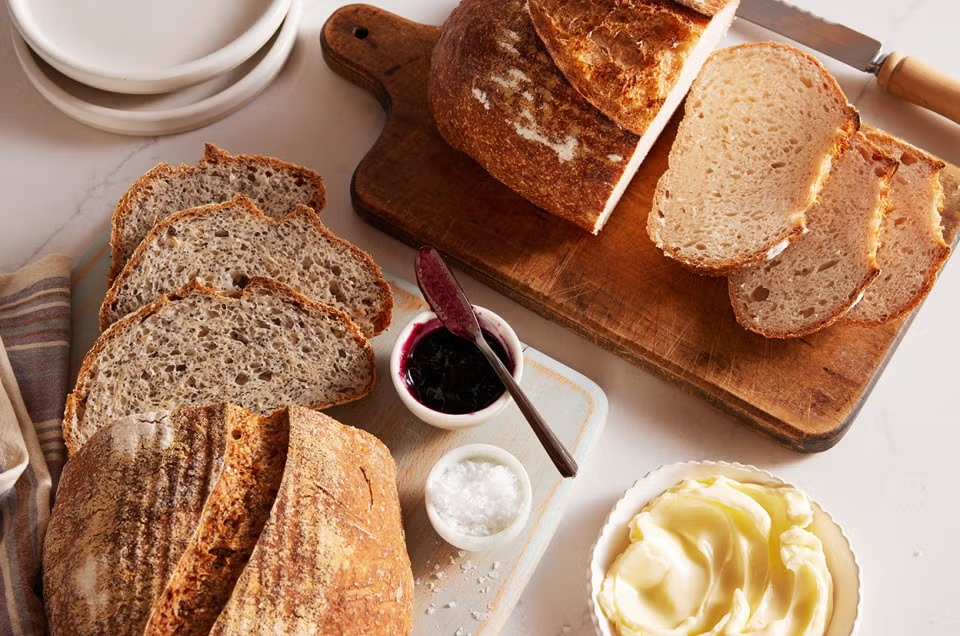
Finding a homemade bread that is both gluten-free and keto-friendly can be challenging. Traditional sourdough is made with wheat or rye flour, while many gluten-free sourdough recipes rely on rice flour, tapioca starch, or other higher-carbohydrate ingredients. This recipe takes a different approach by using low-carb, gluten-free ingredients to create a soft, flavorful loaf with a delicious sourdough-style taste.
This Keto Gluten-Free Sourdough Bread is perfect for breakfast, sandwiches, toast, or simply serving with butter. It has a tender crumb, lightly crisp crust, and subtle tangy flavor. The recipe does require a little patience because sourdough-style fermentation takes time, but the result is worth it.
Because gluten-free and keto baking behave differently from traditional wheat baking, this bread won’t have exactly the same stretchy, hole-filled texture as a conventional wheat sourdough loaf. Instead, it has a satisfying homemade bread texture that works beautifully for everyday meals.
Why You’ll Love This Bread
This bread is designed for people who want to avoid both gluten and high-carb wheat flour. It uses almond flour and coconut flour as the main dry ingredients, giving the loaf a naturally nutty flavor while keeping carbohydrates much lower than conventional bread.
A gluten-free keto sourdough starter provides the characteristic fermented flavor. Since gluten-free starters behave differently from wheat starters, the dough should not be expected to double dramatically like traditional wheat dough.
The recipe is also versatile. You can keep the loaf plain or add herbs, seeds, garlic, or other keto-friendly ingredients for a completely different flavor.
Ingredients
For the sourdough starter:
- ½ cup active gluten-free keto sourdough starter
- 2 tablespoons almond flour
- 1 tablespoon coconut flour
- 2–3 tablespoons filtered water
For the bread:
- 2 cups finely ground almond flour
- ¼ cup coconut flour
- 2 tablespoons ground psyllium husk
- 1 teaspoon baking powder
- ½ teaspoon baking soda
- ½ teaspoon sea salt
- 3 large eggs
- 2 tablespoons olive oil
- 1 tablespoon apple cider vinegar
- ¾ cup warm water
- ½ cup active gluten-free keto sourdough starter
Optional additions:
- 1 tablespoon sesame seeds
- 1 tablespoon sunflower seeds
- 1 teaspoon dried rosemary
- ½ teaspoon garlic powder
- Extra seeds for topping
About the Sourdough Starter
For this recipe, you’ll need an active gluten-free keto-friendly sourdough starter. A traditional wheat sourdough starter is not gluten-free and should not be used if strict gluten avoidance is required.
The starter should look bubbly and active and have a pleasantly tangy smell. Feed it according to your starter’s established routine before preparing the bread.
Because almond and coconut flour behave differently from wheat or rice flour, the starter may not rise in exactly the same way as a conventional starter. Look for bubbles, fermentation activity, and a slightly expanded appearance rather than relying only on volume.
If you need to maintain a strictly gluten-free kitchen, use gluten-free utensils, containers, and ingredients to avoid cross-contact.
Preparing the Dough
Begin by combining the almond flour, coconut flour, psyllium husk, baking powder, baking soda, and salt in a large bowl.
Whisk everything thoroughly so the dry ingredients are evenly distributed.
In a separate bowl, whisk together the eggs, olive oil, apple cider vinegar, warm water, and active sourdough starter.
Slowly pour the wet mixture into the dry ingredients.
Stir with a wooden spoon or sturdy spatula until everything is combined.
The dough will be much thicker than traditional wheat sourdough dough. Don’t expect it to be stretchy or elastic. Psyllium husk absorbs liquid and helps give the gluten-free bread structure.
Allow the dough to rest for approximately 5–10 minutes. During this time, the psyllium and coconut flour will absorb moisture and the dough will become thicker.
Fermentation
Transfer the dough into a parchment-lined loaf pan.
Smooth the top with a damp spatula.
Cover the pan loosely with a clean towel or food-safe cover.
Allow it to ferment at room temperature for several hours. Depending on the strength of your starter and the temperature of your kitchen, fermentation may take approximately 4–8 hours.
The dough doesn’t necessarily need to double. Instead, look for visible bubbles, a slightly expanded appearance, and a fermented aroma.
Avoid leaving it in an extremely warm environment for too long because gluten-free keto dough can become overly fermented and develop an unpleasant texture.
Baking the Bread
Once fermentation is complete, preheat your oven to 350°F (175°C).
If desired, brush the top lightly with olive oil and sprinkle with sesame seeds, sunflower seeds, or dried herbs.
Place the loaf in the preheated oven.
Bake for approximately 45–55 minutes, or until the loaf is firm and golden on top.
The exact baking time can vary depending on the size and shape of your loaf pan.
If the top begins browning too quickly, loosely cover it with foil during the final portion of baking.
A fully baked loaf should feel firm when gently pressed.
The Most Important Step: Cooling
Don’t slice the bread immediately after removing it from the oven.
Gluten-free bread needs time to cool and finish setting. If you cut it while it is still hot, the center can appear gummy or fragile.
Remove the loaf from the pan and place it on a wire rack.
Allow it to cool completely before slicing—ideally for at least 2 hours.
Once cool, use a sharp serrated knife to cut even slices.
This patience makes a big difference in the final texture.
How to Make the Best Keto Gluten-Free Sourdough
Use finely ground almond flour rather than coarse almond meal. Fine flour produces a softer, more uniform crumb.
Measure coconut flour carefully. Coconut flour absorbs a significant amount of liquid, and adding too much can make the bread dry.
Psyllium husk is important because it helps bind the ingredients and gives the bread structure that would normally come from gluten.
Don’t judge fermentation only by the amount of rise. Gluten-free keto dough behaves differently from wheat dough.
Most importantly, allow the bread to cool completely before slicing.
Delicious Variations
For Garlic Herb Sourdough, add garlic powder, dried oregano, rosemary, and parsley to the dough.
For Cheesy Keto Sourdough, add a small amount of shredded cheddar or Parmesan before baking.
For Seeded Sourdough, mix sunflower seeds, pumpkin seeds, and sesame seeds into the dough.
For Rosemary Olive Bread, add chopped olives and dried rosemary for a savory Mediterranean-inspired loaf.
For a slightly sweeter version, add a keto-friendly sweetener and cinnamon. You can then serve slices with butter or a low-carb nut butter.
Serving Ideas
This bread is delicious toasted and spread with butter.
For breakfast, serve it with eggs, avocado, or cream cheese.
For lunch, use it as the base for a turkey and cheese sandwich, chicken salad sandwich, or vegetable sandwich.
You can also cut it into small cubes and toast them to make low-carb croutons.
Another simple option is to toast a slice and top it with mashed avocado, salt, pepper, and a drizzle of olive oil.
The bread also pairs wonderfully with soups and salads.
Storage
Once completely cooled, store the bread in an airtight container or reusable bread bag.
Because homemade gluten-free bread doesn’t contain the preservatives found in many packaged breads, refrigeration can help extend its freshness.
For longer storage, slice the loaf before freezing. Place parchment paper between slices if necessary, then store them in a freezer-safe bag.
Individual slices can be taken directly from the freezer and toasted whenever needed.
This makes the recipe especially convenient for meal preparation.
Troubleshooting
Why is my bread gummy?
The most common reasons are underbaking, too much liquid, or slicing the bread before it has cooled completely. Allow the loaf to cool thoroughly before cutting.
Why didn’t my bread rise much?
Gluten-free keto sourdough doesn’t rise like wheat sourdough. Almond flour contains no gluten network, so the loaf may have a more modest rise.
Why is my bread too dry?
Too much coconut flour can absorb excess moisture. Measuring carefully is important. Also make sure you don’t overbake the loaf.
Can I use regular sourdough starter?
Not if you need the recipe to be gluten-free. Use a properly maintained gluten-free starter.
Is this bread completely carb-free?
No. Almond flour, coconut flour, and other ingredients contain some carbohydrates. The recipe is intended to be low-carb and keto-friendly, but individual nutrition needs vary.
Keto and Gluten-Free Considerations
“Keto” and “gluten-free” are not automatically the same thing. A food can be gluten-free while still being high in carbohydrates. Many commercial gluten-free breads contain rice flour, potato starch, corn starch, or tapioca flour.
Likewise, a recipe can be low-carb but contain gluten if wheat-based ingredients are used.
This recipe is designed around both goals by avoiding traditional wheat flour and using low-carb alternatives.
If you have celiac disease or a medically necessary gluten-free diet, check every packaged ingredient and prevent cross-contact during preparation.
Final Thoughts
This Keto Gluten-Free Sourdough Bread is a wonderful homemade alternative when you’re looking for bread that fits both a gluten-free and low-carb lifestyle. The combination of almond flour, coconut flour, psyllium husk, eggs, and an active gluten-free sourdough starter creates a flavorful loaf with a satisfying texture and gentle fermented tang.
It may behave differently from traditional wheat sourdough, but that’s part of the charm of gluten-free baking. Once you understand how the dough should look and feel, the recipe becomes easy to prepare.
Enjoy it toasted with butter, use it for sandwiches, serve it alongside soup, or simply eat a warm slice straight from the loaf.
Quick Recipe
Prep Time: 20 minutes
Fermentation: 4–8 hours
Bake Time: 45–55 minutes
Cooling: 2 hours
Total Time: Approximately 7–11 hours
Servings: 10–12 slices
Main Ingredients: Almond flour, coconut flour, psyllium husk, eggs, olive oil, apple cider vinegar, and active gluten-free keto sourdough starter.
Method: Combine the dry ingredients, mix in the wet ingredients and active starter, rest the dough, ferment until visibly active, then bake at 350°F until firm and golden. Cool completely before slicing.
Keto Tip: For a stricter keto version, avoid regular wheat flour, rice flour, tapioca starch, potato starch, and regular sugar. Always check the carbohydrate content of your specific ingredients and starter.

