
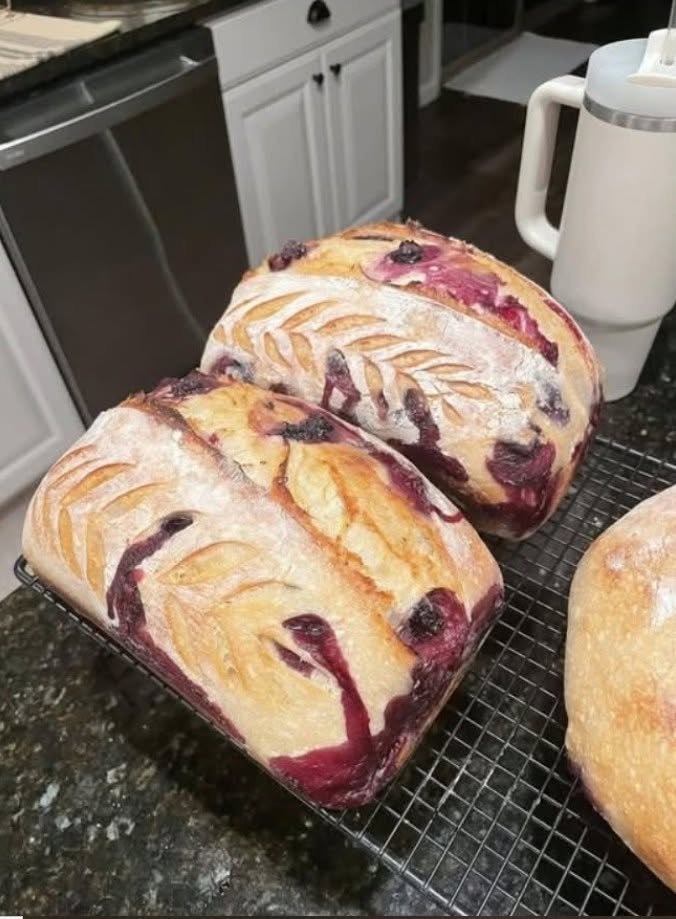
There is something wonderfully special about a loaf of homemade sourdough bread, but when that loaf is filled with juicy blueberries, bright lemon zest, and a beautifully crisp golden crust, it becomes something truly irresistible. These blueberry lemon sourdough loaves are as beautiful as they are delicious, with swirls of deep purple berries running through a tender, naturally leavened crumb.
This recipe is inspired by the rustic artisan loaves shown in the photo: generously studded with berries, lightly dusted with flour, and decorated with simple scoring before baking. The combination of tangy sourdough, sweet-tart blueberries, and fresh lemon creates a loaf that tastes bakery-worthy while still being achievable in your own kitchen.
The key to making this bread successfully is patience. Sourdough does not need to be difficult, but it does need time. Allowing the dough to ferment properly gives the loaf its characteristic flavor, airy texture, and beautiful rise.
Why You’ll Love This Recipe
This bread is perfect for anyone who enjoys experimenting with sourdough beyond the traditional plain loaf. The blueberries add pockets of fruity sweetness, while lemon zest provides a fresh citrus aroma that balances the richness of the bread.
It is delicious toasted with butter, wonderful alongside breakfast, and special enough to serve for brunch. You can even turn slices into French toast for an indulgent weekend treat.
The finished loaf has a crisp, caramelized crust on the outside and a soft, slightly chewy interior. As the blueberries bake, some burst into the dough, creating gorgeous purple streaks throughout the loaf.
Ingredients
For two medium-sized loaves, you will need:
- 200g active sourdough starter
- 700g bread flour
- 100g whole wheat flour
- 600g water, plus a little extra if needed
- 18g fine sea salt
- 250g fresh blueberries
- Zest of 2 lemons
- 40g honey or maple syrup
- A little rice flour or bread flour for dusting
Fresh blueberries work particularly well because they release their juices during baking. If you only have frozen blueberries, use them directly from the freezer rather than thawing them first. Thawed berries can release too much liquid and make the dough difficult to handle.
Step 1: Prepare the Sourdough Starter
Before beginning, make sure your sourdough starter is active and healthy. It should have been fed several hours earlier and should look bubbly, airy, and expanded.
A simple test is to look at the starter itself. If it has risen significantly and contains plenty of bubbles, it is generally ready to use.
For the best results, use your starter when it is near its peak activity rather than after it has completely collapsed.
Step 2: Mix the Dough
Add the bread flour and whole wheat flour to a large mixing bowl. Pour in approximately 550g of the water and mix until no dry flour remains.
Cover the bowl and let the mixture rest for 30 to 60 minutes. This resting period, often called an autolyse, gives the flour time to absorb the water and helps develop gluten.
Next, add the active sourdough starter, honey, and lemon zest. Mix thoroughly using your hands or a sturdy dough whisk.
Add the salt and gradually incorporate the remaining water. The dough should feel soft and slightly sticky but should not be completely liquid.
Do not worry if the dough seems messy at this stage. As you perform the folds, it will gradually become smoother and stronger.
Step 3: Build Strength With Stretch and Folds
Cover the bowl and allow the dough to rest for about 30 minutes.
Now begin your stretch-and-fold process.
With damp hands, grab one side of the dough, gently stretch it upward, and fold it over the center. Rotate the bowl and repeat on all four sides.
Perform a set of folds every 30 minutes for the first two hours.
You should notice the dough changing as you work. Initially it may spread quickly around the bowl, but after several sets of folds it should become elastic, smoother, and better able to hold its shape.
Be gentle. Overworking the dough can crush the developing structure, and you want to maintain the air that fermentation is creating.
Step 4: Add the Blueberries
Once the dough has developed some strength, it is time to add the blueberries.
Instead of aggressively kneading the berries into the dough, gently stretch the dough into a rough rectangle. Sprinkle the blueberries evenly over the surface, followed by the lemon zest if you have not already added it.
Fold the dough over itself several times to enclose the berries.
Some blueberries will inevitably break. That is completely fine. In fact, those bursts of berry juice are what create some of the gorgeous purple marbling visible in the finished bread.
Try not to overwork the dough after adding the fruit. Too much handling can cause the berries to break down and make the dough excessively wet.
Step 5: Bulk Fermentation
Place the dough in a lightly greased or clean bowl and cover it.
Allow it to ferment at room temperature until it has noticeably increased in volume and looks airy. Depending on the temperature of your kitchen and the strength of your starter, this can take approximately four to seven hours.
Rather than relying solely on the clock, watch the dough.
It should appear puffy, have visible bubbles around the edges, and jiggle slightly when the bowl is moved.
A warm kitchen will speed fermentation, while a cool kitchen will slow it down. Sourdough rewards you for paying attention to the dough rather than following a rigid schedule.
Step 6: Divide and Shape
Turn the fermented dough onto a lightly floured work surface.
Divide it into two equal portions using a dough scraper.
Gently shape each portion into a loose round and let them rest for about 20 minutes.
After the bench rest, shape each loaf more tightly. Pull the edges toward the center, then turn the dough over and use your hands or a bench scraper to create surface tension.
Place each loaf seam-side up into a well-floured proofing basket.
For the beautiful rustic appearance shown in the photo, use rice flour on the baskets. It helps prevent sticking and gives the baked loaves a lovely flour-dusted finish.
Step 7: Cold Proof Overnight
Cover the baskets and place them in the refrigerator.
Allow the loaves to proof for approximately eight to sixteen hours.
This overnight fermentation is one of the easiest ways to develop deep sourdough flavor while making the baking process more convenient. You can prepare the dough in the evening and bake it the following morning.
The cold dough will also be easier to score, which is especially helpful when working with a fruit-filled loaf.
Step 8: Score and Bake
Preheat your oven to 475°F (245°C) with a Dutch oven or other heavy, covered baking vessel inside.
When the oven is thoroughly heated, carefully turn one loaf onto a sheet of parchment paper.
Dust the surface lightly with flour and score it using a bread lame or very sharp knife.
For a decorative finish, try a simple wheat-style pattern, curved leaves, or several diagonal cuts. The scoring is not only decorative—it gives the bread a controlled place to expand during baking.
Carefully transfer the loaf into the preheated Dutch oven.
Bake covered for approximately 20 minutes. Then remove the lid, reduce the oven temperature to 450°F (230°C), and continue baking for another 20 to 25 minutes, or until the crust is deeply golden brown.
Repeat with the second loaf.
If the blueberries have caramelized around the edges, don’t worry. Those dark, fruity spots are packed with flavor.
The Most Important Step: Let It Cool
As tempting as it may be, do not slice the bread immediately.
Allow each loaf to cool completely on a wire rack for at least one to two hours.
The interior continues to set as the bread cools. Cutting too early can result in a gummy crumb, even if the loaf was baked correctly.
Once cool, use a serrated bread knife to slice through the loaf. You should see a soft crumb dotted and streaked with beautiful purple blueberry pockets.
Serving Suggestions
This blueberry lemon sourdough is delicious all on its own, but there are plenty of ways to serve it.
Try a warm slice with salted butter for a simple breakfast. For something sweeter, spread it with cream cheese, mascarpone, or a little honey.
It is also wonderful toasted and topped with Greek yogurt and fresh berries.
For an extra-special brunch, use thick slices to make blueberry lemon French toast. The naturally tangy sourdough works beautifully with eggs, milk, vanilla, and a little maple syrup.
You can also serve it alongside coffee or tea as a rustic afternoon treat.
Tips for Perfect Blueberry Sourdough
Use an active starter. A weak starter will struggle to lift a dough containing fruit.
Don’t add too much extra flour. The dough may feel sticky initially, but excessive flour can produce a dense loaf.
Handle blueberries gently. Some bursting is desirable, but excessive crushing can make the dough difficult to shape.
Watch fermentation carefully. Temperature, starter strength, flour, and hydration all affect fermentation time.
Preheat your Dutch oven thoroughly. A properly heated baking vessel creates the steam and heat needed for excellent oven spring.
Cool completely before slicing. This makes a major difference in the final crumb.
Final Thoughts
Homemade blueberry lemon sourdough bread is one of those recipes that makes baking feel truly rewarding. It combines the rustic character of artisan sourdough with the bright flavor of lemon and the natural sweetness of blueberries.
The loaves may look elaborate, especially with decorative scoring and dramatic purple berry streaks, but the process is surprisingly straightforward. The real ingredient you need most is time.
Once you become comfortable with the basic sourdough method, this recipe is also easy to customize. You can experiment with different berries, add a little vanilla, incorporate white chocolate, or replace some of the blueberries with blackberries or raspberries.
Whether you bake it for a weekend breakfast, a holiday brunch, or simply because you want your kitchen to smell incredible, this blueberry lemon sourdough is a loaf worth making again and again.
Recipe at a Glance: Prepare the dough, strengthen it with folds, gently incorporate the blueberries, allow it to bulk ferment, shape the loaves, refrigerate overnight, then score and bake until deeply golden. The result is a crisp, rustic crust wrapped around a soft, fragrant crumb filled with juicy berries and fresh lemon flavor.
