
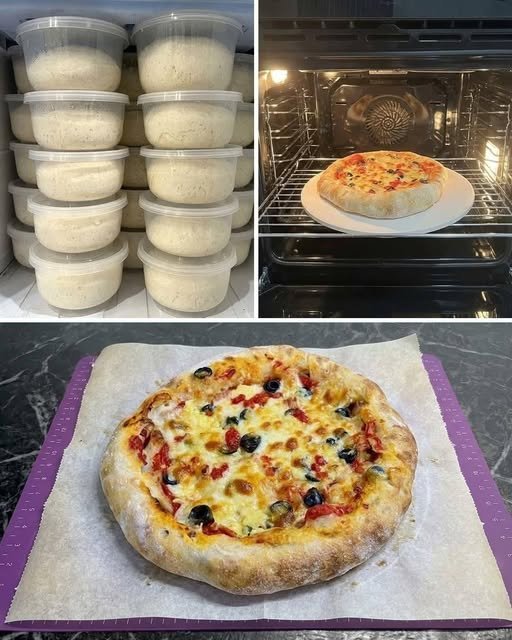
There’s something extra special about a homemade sourdough pizza. The crust is beautifully crisp around the edges, soft and chewy in the center, and full of the delicious flavor that comes from naturally fermented sourdough. If you love that rustic, bakery-style pizza with golden bubbles, melted cheese, and flavorful toppings, this recipe is perfect for you.
This Homemade Sourdough Pizza is made with an active sourdough starter, simple pantry ingredients, and your favorite pizza toppings. The dough can be prepared ahead of time, making it a great option for a relaxed pizza night at home.
🍕 Why You’ll Love This Sourdough Pizza
Sourdough pizza has a wonderful texture that is difficult to get from ordinary pizza dough. The long fermentation gives the crust a slightly tangy flavor while helping create a light and airy interior.
The outside becomes golden and crisp during baking, while the inside stays soft and chewy. You can also customize the toppings depending on what you have available.
This recipe is great for:
- Homemade pizza nights
- Sourdough starter users
- Weekend baking
- Family dinners
- Make-ahead meals
- Customizable pizza toppings
🥣 Ingredients
For the Sourdough Pizza Dough
- 100 g active sourdough starter
- 350 g bread flour
- 230 g lukewarm water
- 8 g salt
- 10 g olive oil
For the Pizza Topping
- ½ cup pizza sauce
- 1½ cups shredded mozzarella cheese
- ¼ cup sliced black olives
- ¼ cup chopped bell peppers
- ¼ cup sliced mushrooms
- ¼ cup sliced onion
- 2–3 tablespoons chopped tomatoes
- 1 teaspoon dried oregano
- ½ teaspoon garlic powder
- 1 tablespoon olive oil
You can easily replace the toppings with pepperoni, cooked chicken, sausage, spinach, jalapeños, or any other ingredients you enjoy.
👩🍳 How to Make Homemade Sourdough Pizza
Step 1: Prepare the Dough
Start by making sure your sourdough starter is active and bubbly. An active starter is important because it helps the dough rise naturally.
In a large mixing bowl, combine the sourdough starter and lukewarm water. Stir until the starter is mostly dissolved.
Add the bread flour and mix until a rough dough forms. Cover the bowl and let it rest for about 30 minutes.
This resting period allows the flour to absorb the water and makes the dough easier to work with.
Step 2: Add Salt and Olive Oil
After the dough has rested, add the salt and olive oil. Use your hands to gently knead and fold the dough until everything is well incorporated.
The dough may feel slightly sticky at first, but avoid adding too much extra flour. A slightly wet dough helps create a softer and airier pizza crust.
Step 3: Stretch and Fold
Cover the bowl and let the dough rest.
Over the next 2 hours, perform a series of stretch-and-folds every 30 minutes. To do this, grab one side of the dough, stretch it upward gently, and fold it over the center. Rotate the bowl and repeat on all four sides.
This process strengthens the gluten and helps create a beautifully airy crust.
Step 4: Bulk Fermentation
After the stretch-and-fold process, cover the dough and allow it to ferment at room temperature for approximately 4–6 hours, depending on the temperature of your kitchen.
The dough should become noticeably puffier and lighter.
For deeper sourdough flavor, you can place the dough in the refrigerator overnight after the initial fermentation.
Step 5: Shape the Dough
When you’re ready to make the pizza, transfer the dough onto a lightly floured surface.
Divide it into 2 portions if you want two medium pizzas, or keep it as one large pizza.
Shape each portion gently into a ball. Try not to press all the air out of the dough.
Cover the dough balls and let them rest for another 30–60 minutes.
Step 6: Stretch the Pizza
Preheat your oven to its highest setting, ideally around 475–500°F (245–260°C). If you have a pizza stone or steel, place it in the oven while it preheats.
Take one dough ball and gently press it outward with your fingertips.
Leave a slightly thicker border around the edge for that beautiful puffy crust. Carefully stretch the dough until you reach your desired pizza size.
Avoid using a rolling pin because it can flatten the air bubbles that make sourdough pizza light and airy.
Step 7: Add the Toppings
Transfer the stretched dough onto parchment paper or a well-floured pizza peel.
Spread a thin layer of pizza sauce over the dough.
Add shredded mozzarella, followed by your favorite toppings. For a pizza similar to the one shown, add black olives, colorful peppers, tomatoes, mushrooms, and onions.
Finish with oregano, garlic powder, and a small drizzle of olive oil.
Don’t overload the pizza with toppings because too many ingredients can make the center soggy.
Step 8: Bake
Carefully transfer the pizza to the preheated pizza stone, steel, or baking tray.
Bake for approximately 10–15 minutes, or until the crust is golden brown and the cheese is bubbling and lightly browned.
For an especially golden top, you can turn on the broiler for the final 1–2 minutes, but watch the pizza carefully.
The crust should look crisp around the edges while remaining soft and airy inside.
Step 9: Cool and Serve
Remove the pizza from the oven and let it rest for a few minutes.
Add a little fresh basil, oregano, chili flakes, or grated Parmesan if desired.
Slice and serve while warm.
⭐ Tips for Perfect Sourdough Pizza
Use an active starter: Your starter should be bubbly and recently fed. A weak starter can result in a dense crust.
Don’t add too much flour: Sticky dough is normal. Adding excessive flour can make the finished pizza heavy.
Give the dough enough fermentation time: Sourdough needs time to develop its flavor and texture.
Preheat your oven well: A very hot oven gives the crust that delicious crisp exterior and helps the edges puff beautifully.
Don’t overload the pizza: Keep the sauce and toppings relatively light so the crust can bake properly.
Use a pizza stone or steel: If you have one, it can help produce a crispier bottom similar to a pizza oven.
🧀 Topping Ideas
One of the best things about homemade pizza is how easy it is to customize.
Try:
- Classic Margherita: Tomato sauce, mozzarella, and fresh basil
- Garlic Chicken: Chicken, mozzarella, garlic, and spinach
- Veggie: Mushrooms, peppers, onions, olives, and tomatoes
- Spicy: Jalapeños, chili flakes, pepperoni, and mozzarella
- Cheesy: Mozzarella, Parmesan, cheddar, and provolone
- Mediterranean: Olives, tomatoes, feta, spinach, and herbs
🧊 Make-Ahead Instructions
Sourdough pizza dough is excellent for making ahead.
After shaping the dough balls, place them in covered containers and refrigerate them for up to 2–3 days. When you’re ready to bake, take the dough out and allow it to sit at room temperature for about 1–2 hours before stretching.
You can also freeze shaped dough balls. Place them in airtight freezer-safe containers and freeze. Thaw them in the refrigerator before bringing them to room temperature and baking.
🍕 Final Thoughts
This Homemade Sourdough Pizza is a delicious way to use your sourdough starter and create a restaurant-style pizza right in your own kitchen. The long fermentation gives the crust incredible flavor, while a hot oven creates those beautiful golden edges and melted, bubbly cheese.
Whether you keep the toppings simple or pile on your favorite vegetables, meats, and cheese, homemade sourdough pizza is always a crowd-pleaser. Once you try making your own sourdough pizza dough, you may never want ordinary pizza dough again!

