
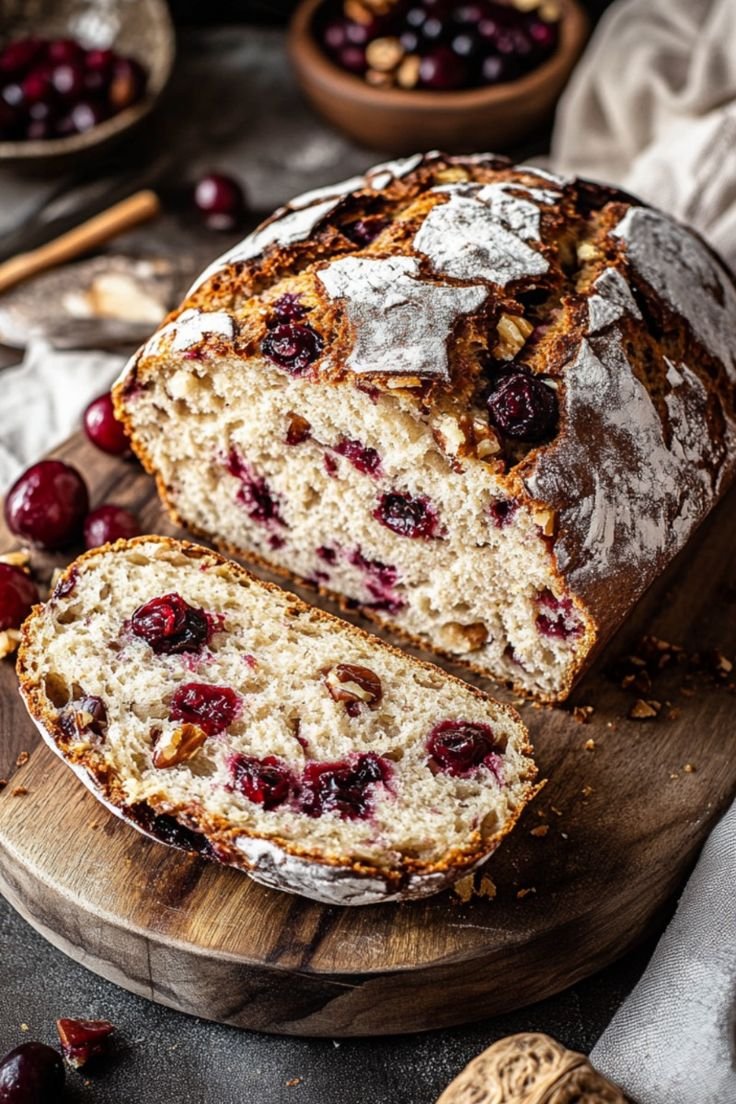
Sourdough Walnut Cranberry Bread: A Rustic Artisan Loaf Bursting with Flavor
There’s something incredibly satisfying about baking a loaf of sourdough bread from scratch. The aroma that fills your kitchen, the crackling crust fresh from the oven, and the soft, chewy crumb make every step worthwhile. If you’re looking to elevate your sourdough baking, Sourdough Walnut Cranberry Bread is a wonderful place to start. This artisan loaf combines the tangy flavor of naturally fermented sourdough with sweet dried cranberries and crunchy walnuts, creating a bread that’s perfect for breakfast, holiday gatherings, sandwiches, or simply enjoyed with butter.
Whether you’re an experienced sourdough baker or someone ready to try mix-ins for the first time, this recipe will guide you through every step.
Why You’ll Love This Recipe
This bread offers the perfect balance of flavors and textures. The tart sourdough complements the sweetness of cranberries, while toasted walnuts add a delicious crunch. It slices beautifully, stays fresh for several days, and tastes even better when toasted.
You’ll love it because:
- Naturally fermented for better flavor
- Soft, chewy interior with a crispy crust
- Sweet and savory combination
- Great for breakfast or cheese boards
- Free from commercial preservatives
- Easy to customize
Ingredients
For the Dough
- 500g bread flour
- 350g warm water
- 100g active sourdough starter
- 10g salt
Mix-ins
- 120g dried cranberries
- 100g walnuts, roughly chopped
- Optional: 1 tablespoon honey
- Optional: 1 teaspoon cinnamon
Equipment Needed
- Large mixing bowl
- Kitchen scale
- Dough scraper
- Banneton basket or bowl lined with a towel
- Dutch oven
- Parchment paper
- Sharp bread lame or razor blade
- Cooling rack
Preparing Your Starter
Your starter should be active and bubbly before using it.
Feed it about 4–6 hours before mixing the dough. It’s ready when it has doubled in size and floats in water.
A healthy starter is the key to achieving an airy loaf with beautiful oven spring.
Step 1: Mix the Dough
In a large bowl combine:
- Water
- Active starter
Mix until dissolved.
Add the flour and stir until no dry flour remains.
Cover the bowl and let it rest for 30 minutes. This process is called autolyse, allowing the flour to hydrate and making gluten development easier.
Step 2: Add Salt
Sprinkle the salt over the dough.
Wet your hands and fold the dough repeatedly until the salt is fully incorporated.
The dough will become smoother after a few minutes.
Step 3: Bulk Fermentation
Cover the bowl and allow the dough to ferment for 4–5 hours at room temperature.
During the first two hours perform stretch-and-folds every 30 minutes.
To stretch and fold:
- Lift one side of the dough
- Stretch upward
- Fold over itself
- Rotate the bowl
- Repeat four times
Each fold strengthens the gluten.
Step 4: Add Cranberries and Walnuts
After the second stretch-and-fold, gently flatten the dough.
Sprinkle:
- Dried cranberries
- Chopped walnuts
Fold the dough over the filling several times until everything is evenly distributed.
Avoid overmixing.
The fruit should remain intact.
Step 5: Continue Fermentation
Allow the dough to continue fermenting until it has increased by about 50%.
You’ll notice:
- Air bubbles
- Puffy appearance
- Smooth surface
The dough should feel light and airy.
Step 6: Pre-Shape
Turn the dough onto a lightly floured surface.
Shape into a loose round.
Let it rest uncovered for 20 minutes.
This allows the gluten to relax before final shaping.
Step 7: Final Shape
Shape the dough tightly into either:
- Round boule
- Oval batard
Place seam-side up into a floured banneton basket.
Step 8: Cold Proof
Cover and refrigerate for 8–14 hours.
Cold fermentation develops deeper flavor and makes scoring easier.
Many bakers prefer baking directly from the refrigerator.
Step 9: Preheat Oven
Place your Dutch oven inside.
Preheat oven to 475°F (245°C) for at least 45 minutes.
A thoroughly heated Dutch oven creates excellent oven spring.
Step 10: Score the Dough
Turn the dough onto parchment paper.
Dust lightly with flour.
Use a bread lame or razor blade to score the top.
One long slash works well.
Decorative leaf patterns also look beautiful.
Step 11: Bake
Transfer the dough into the hot Dutch oven.
Bake:
- 20 minutes with the lid on
- 20–25 minutes with the lid off
The loaf should develop:
- Deep golden crust
- Crisp exterior
- Hollow sound when tapped
Internal temperature should reach about 205–210°F (96–99°C).
Cooling
Place the loaf on a cooling rack.
Allow it to cool for at least 1 hour before slicing.
Cutting too soon can result in a gummy interior.
Patience rewards you with the perfect crumb.
Flavor Profile
Each bite delivers:
- Mild sourdough tang
- Sweet bursts of cranberry
- Nutty walnut crunch
- Crispy artisan crust
- Moist chewy interior
It’s both rustic and elegant.
Serving Ideas
This bread pairs wonderfully with:
- Butter
- Cream cheese
- Honey
- Brie cheese
- Goat cheese
- Sharp cheddar
- Turkey sandwiches
- Chicken salad
- Apple slices
- Fig jam
It also makes outstanding French toast.
Storage Tips
Store in:
- Bread bag
- Linen bag
- Paper bag
Avoid refrigerating.
Keeps fresh for:
- 3–4 days at room temperature
For longer storage:
Slice first.
Freeze for up to 3 months.
Toast directly from frozen.
Variations
Try different flavor combinations:
Orange Cranberry
Add:
- Orange zest
Cinnamon Walnut
Add:
- 2 teaspoons cinnamon
Maple Walnut
Replace honey with maple syrup.
Pumpkin Spice
Add:
- Pumpkin pie spice
- Pecans instead of walnuts
Cranberry Pistachio
Swap walnuts for pistachios.
Mixed Fruit
Add:
- Raisins
- Apricots
- Cherries
Common Mistakes
Inactive Starter
Always use an active starter.
Too Much Flour
Wet dough creates lighter bread.
Overproofing
Watch the dough instead of the clock.
Underproofing
Dense bread usually means insufficient fermentation.
Cutting Too Soon
Always allow full cooling.
Nutrition (Approximate Per Slice)
- Calories: 210
- Protein: 6g
- Carbohydrates: 35g
- Fat: 6g
- Fiber: 3g
- Sugar: 6g
- Sodium: 210mg
Values vary depending on ingredients used.
Frequently Asked Questions
Can I use fresh cranberries?
Fresh cranberries contain much more moisture and can make the dough wetter. Dried cranberries are recommended for the best texture and flavor.
Should I toast the walnuts?
Yes. Toasting walnuts for 5–8 minutes before adding them enhances their nutty flavor and keeps them crisp in the finished loaf.
Can I make this recipe without a Dutch oven?
Yes. Bake on a preheated baking stone or tray and place a pan of hot water in the oven to create steam during the first 20 minutes of baking.
How do I know when bulk fermentation is complete?
The dough should look puffy, feel airy, and have increased in volume by about 50%, with visible bubbles beneath the surface.
Final Thoughts
Sourdough Walnut Cranberry Bread is a bakery-style artisan loaf that combines wholesome ingredients with incredible flavor. The chewy sourdough crumb, crunchy toasted walnuts, and sweet cranberries create a loaf that’s perfect for everything from breakfast toast to holiday cheese boards. Once you bake this recipe, it’s sure to become a favorite in your sourdough collection, offering beautiful slices that are as impressive to serve as they are delicious to eat.
