
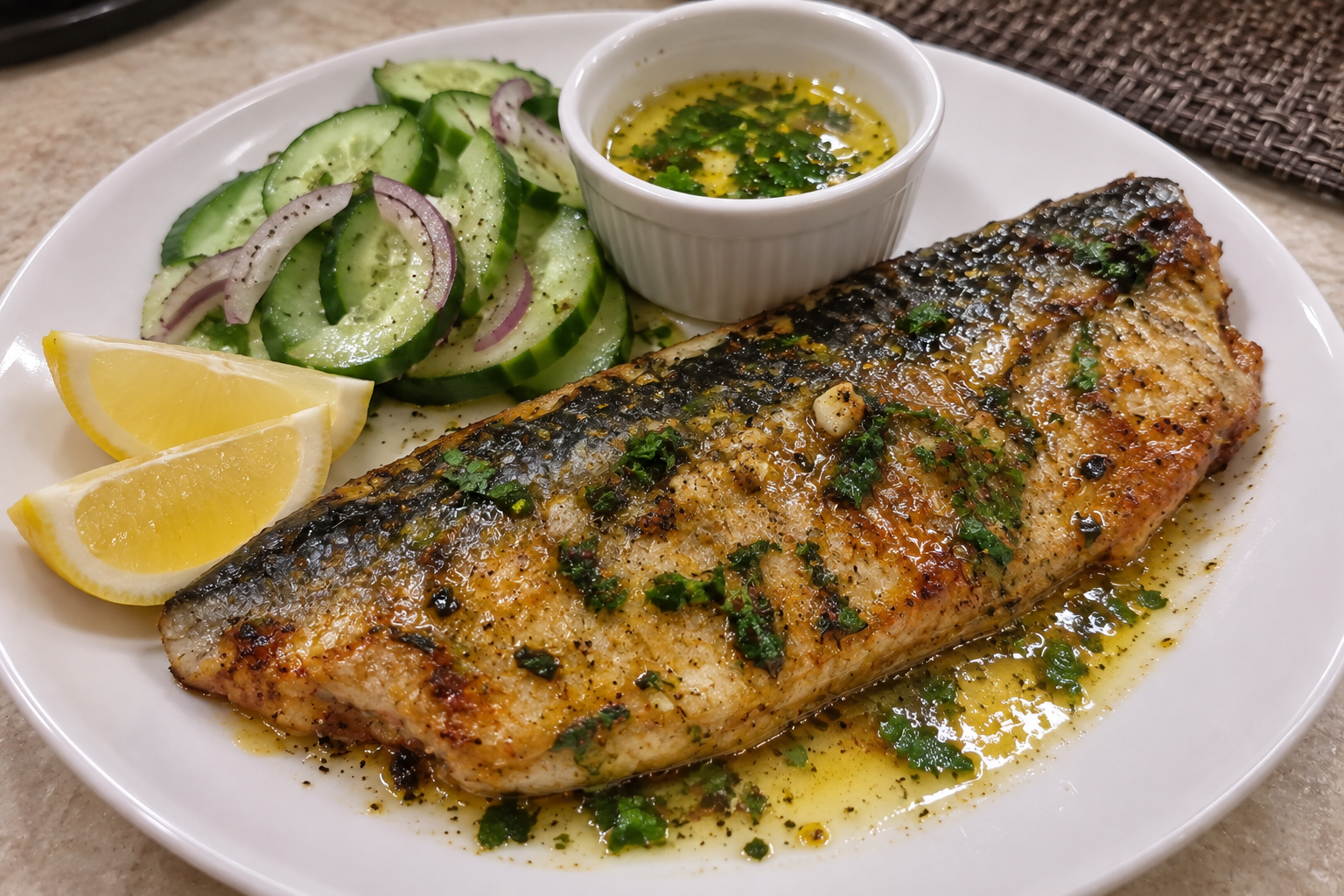
Herb Butter Mackerel Recipe
If you’re looking for a simple, flavorful, and satisfying seafood dinner, this Herb Butter Mackerel is an excellent choice. Mackerel is naturally rich, tender, and full of flavor, so it doesn’t require complicated ingredients or lengthy preparation. A simple combination of butter, garlic, fresh herbs, and lemon creates a delicious topping that complements the rich fish beautifully.
This recipe is especially suitable for people following a very-low-carb or keto-style eating plan because it focuses on mackerel, butter, herbs, and seasonings. It can be served on its own or paired with your preferred low-carb vegetables.
The best part is that this recipe comes together quickly, making it perfect for busy weeknight dinners. Whether you’re an experienced seafood lover or trying mackerel for the first time, this easy preparation is worth adding to your recipe collection.
Why You’ll Love Herb Butter Mackerel
There are many reasons to make this recipe.
First, mackerel has a naturally rich and buttery texture, which pairs beautifully with a homemade herb butter sauce.
Second, the recipe uses simple ingredients that are easy to prepare. You don’t need a long list of spices or complicated marinades.
The garlic and herbs add freshness, while butter gives the fish a smooth, rich finish. A little lemon juice can brighten everything at the end.
This recipe is also versatile. You can cook the mackerel in a skillet, bake it in the oven, or finish it under the broiler for slightly crisp edges.
Ingredients
For 4 servings, you’ll need:
- 4 mackerel fillets
- 3 tablespoons unsalted butter
- 2 cloves garlic, finely minced
- 1 tablespoon fresh parsley, finely chopped
- 1 teaspoon fresh dill, chopped
- ½ teaspoon dried thyme
- ½ teaspoon black pepper
- ½ teaspoon salt, or to taste
- 1 tablespoon fresh lemon juice
- 1 teaspoon lemon zest, optional
- 1 tablespoon olive oil
For garnish:
- Extra fresh parsley
- Lemon wedges
- A small amount of additional melted butter, optional
Fresh herbs provide the best flavor, but dried herbs can be used when fresh herbs aren’t available.
How to Make Herb Butter Mackerel
Step 1: Prepare the Mackerel
Pat the mackerel fillets dry with paper towels.
Removing excess moisture helps the fish develop a better surface texture during cooking.
Check the fillets carefully for any remaining bones and remove them with clean kitchen tweezers if necessary.
Season both sides lightly with salt and black pepper.
Set the fish aside while preparing the herb butter.
Step 2: Make the Herb Butter
Place the butter in a small bowl.
Add the minced garlic, chopped parsley, dill, thyme, lemon zest, and a small amount of black pepper.
Mix everything together until well combined.
If you prefer a stronger garlic flavor, add another small clove of garlic.
The herb butter can be prepared several hours in advance and stored in the refrigerator until you’re ready to cook.
Step 3: Heat the Pan
Place a large skillet over medium heat.
Add the olive oil and allow it to warm for about 30 seconds.
The combination of olive oil and butter helps create a flavorful cooking base while reducing the chance of the butter browning too quickly.
Step 4: Cook the Mackerel
Place the mackerel fillets into the hot skillet, skin-side down if the skin is still attached.
Cook for approximately 3–5 minutes, depending on the thickness of the fillets.
Avoid moving the fish too much while it cooks. Allowing it to remain in contact with the pan helps create a nicely browned surface.
Carefully turn the fillets using a wide spatula.
Step 5: Add the Herb Butter
Reduce the heat to medium-low.
Add the prepared herb butter to the skillet.
As the butter melts, spoon it repeatedly over the top of the mackerel.
This process helps coat the fish with garlic, herbs, and buttery flavor.
Continue cooking for another 2–4 minutes, or until the fish is cooked through and flakes easily.
Mackerel should be opaque and tender in the center.
Step 6: Add Lemon
Remove the skillet from the heat.
Drizzle the fresh lemon juice over the mackerel.
The acidity of the lemon balances the richness of the butter and fish.
Avoid adding too much lemon at once. Start with a small amount and add more according to your taste.
Step 7: Garnish and Serve
Transfer the cooked mackerel to serving plates.
Spoon some of the remaining herb butter from the skillet over each fillet.
Sprinkle with fresh parsley and serve with lemon wedges.
Serve immediately while the fish is hot and tender.
Tips for Choosing Mackerel
Fresh mackerel should have a clean, fresh smell and firm flesh.
If you’re purchasing fillets, look for flesh that appears moist and bright rather than dull or dry.
Frozen mackerel can also work well. If using frozen fillets, thaw them completely in the refrigerator before cooking.
After thawing, pat them dry thoroughly before seasoning.
Different types of mackerel can vary in size, flavor, and fat content, so cooking time may need to be adjusted.
How to Get Crispy Mackerel Skin
If your mackerel has skin, you can make it beautifully crisp.
The most important step is drying the skin thoroughly before cooking.
Place the fillets skin-side down in a properly heated skillet and avoid moving them during the first few minutes.
Press gently with a spatula for a few seconds if the skin begins to curl.
Cook until the skin becomes golden and crisp before carefully turning the fish.
The crisp skin provides a delicious contrast to the soft, buttery flesh.
Oven-Baked Version
If you prefer not to cook fish on the stovetop, you can bake the mackerel.
Preheat the oven to 400°F (200°C).
Place the seasoned fillets on a lightly greased baking sheet.
Spread the herb butter over each fillet.
Bake for approximately 10–15 minutes, depending on thickness.
The fish should be opaque and flake easily when tested with a fork.
Finish with fresh lemon juice and parsley before serving.
Low-Carb Serving Ideas
If you’re keeping carbohydrates very low, serve the mackerel with simple sides such as:
- Sautéed spinach
- Roasted zucchini
- Steamed broccoli
- Cauliflower mash
- Sautéed mushrooms
- Green salad
- Roasted asparagus
You can also simply serve the fish with extra herb butter and lemon for a straightforward meal.
Keep in mind that the exact carbohydrate content of the complete meal depends on the sides and ingredients you choose.
Flavor Variations
Garlic & Rosemary Mackerel
Replace the dill with fresh rosemary for a stronger herbal flavor.
Chili Herb Mackerel
Add a pinch of chili flakes to the herb butter for a spicy version.
Lemon Dill Mackerel
Use extra fresh dill and lemon zest for a bright, fresh flavor.
Smoked Paprika Mackerel
Add a small amount of smoked paprika to the seasoning for a deeper, smoky taste.
Parmesan Herb Mackerel
For a richer variation, sprinkle a small amount of grated Parmesan over the fish during the final minutes of cooking.
Common Mistakes to Avoid
Overcooking the fish: Mackerel cooks quickly. Keep an eye on the fillets and remove them once they are just cooked through.
Using too much heat: Very high heat can burn the garlic and butter before the fish is finished.
Not drying the fish: Excess moisture can prevent proper browning.
Adding lemon too early: Too much acidic liquid during cooking can interfere with browning. Adding fresh lemon at the end keeps the flavor bright.
Over-seasoning: Mackerel already has a rich, distinctive flavor, so a simple seasoning works best.
Storage and Reheating
If you have leftovers, allow the mackerel to cool before transferring it to an airtight container.
Store it in the refrigerator and consume within 2–3 days.
Reheat gently in a skillet over low heat or in the oven until warmed through.
Avoid overheating because fish can become dry when reheated for too long.
For the best texture, enjoy mackerel freshly cooked whenever possible.
Frequently Asked Questions
Can I use frozen mackerel?
Yes. Thaw it completely in the refrigerator, then pat it dry before cooking.
Can I use salted butter?
Yes, but reduce the additional salt in the recipe. Taste before adding more.
Can I make this recipe without garlic?
Absolutely. Simply leave out the garlic and increase the fresh herbs slightly.
Can I use dried herbs?
Yes. Dried parsley, dill, and thyme can be used, although fresh herbs generally provide a brighter flavor.
Is mackerel good for a low-carb diet?
Plain mackerel is naturally very low in carbohydrates. However, the overall carbohydrate content of your meal depends on the sauces, seasonings, and side dishes you serve with it.
Final Thoughts
This Herb Butter Mackerel recipe proves that a delicious seafood dinner doesn’t need to be complicated. Rich mackerel, creamy butter, fragrant garlic, fresh herbs, and bright lemon create a meal that is simple yet full of flavor.
It takes only a short amount of time to prepare and can be cooked either on the stovetop or in the oven. Serve it with your favorite low-carb vegetables for a satisfying dinner, or enjoy it simply with extra herb butter and lemon.
If you’re looking for an easy seafood recipe that delivers bold flavor with minimal effort, this herb butter mackerel deserves a place on your weekly menu.
