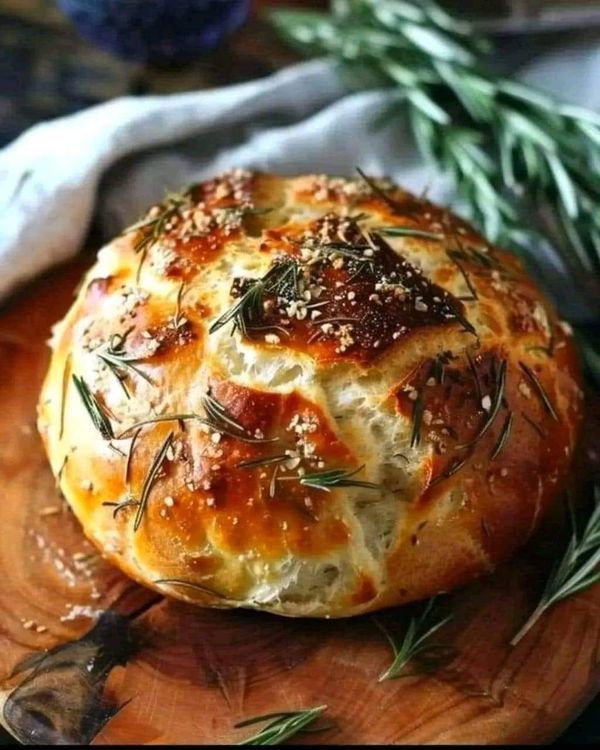
Mirror mirror on the wall, who’s the most irresistible loaf 🍞 of them all? Hands down, my No Knead Peasant Bread! This timeless, natural beauty has been a staple in my kitchen since I was a little girl. That’s why I’ve decided to put my modern twist on this traditional recipe and create this No Knead Garlic Bread version for all my garlic 🧄 lovers out there.
Infused with a homemade garlic confit (which sounds much more intimidating to make than it actually is), this No Knead Garlic Bread will elevate your bread game and turn you into a self-proclaimed bread snob 😤.
Why You’ll Love No Knead Garlic Bread
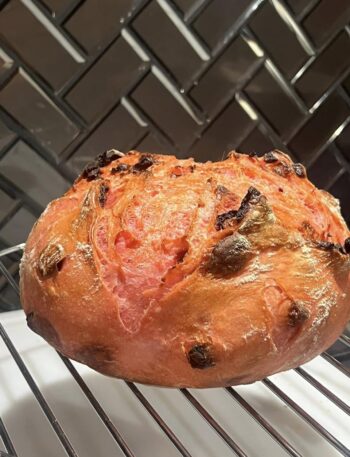
Golden brown and crispy on the outside with a soft and airy interior – this bread is what carb dreams 💭 are made of! When you break through the crust, you encounter a garlicky, slightly chewy but light and pillowy crumb that’s going to have you devouring the whole loaf 🍞. Slathered with butter or served with soup or stew, this No Knead Garlic Bread is giving everything it needs to give (and more).
Tip
The water added to the dough must be between 100 and 110 degrees Fahrenheit (37 to 43 degrees Celsius). If the water is too hot or too cold the yeast will not activate. Always check if the yeast is expired prior to starting.
Variations and Substitutions for No Knead Garlic Bread
Don’t hesitate to adjust the recipe according to your preferences. But keep in mind that you may need to change quantities and experiment with different techniques to achieve the desired flavor and texture.
- Instead of dry oregano or rosemary, you can experiment with other 🌿 herbs such as thyme, basil, or parsley.
- Feel free to use whole wheat flour or a mixture of whole wheat and all-purpose flour for a heartier loaf.
- If you don’t have active dry yeast, you can use instant yeast. Just keep in mind that instant yeast may require different activation methods, so follow the package instructions.
- Feel free to adjust the amount of 🧄 garlic cloves according to your taste preferences. You can also roast additional garlic cloves to use as a spread or topping for the bread.
- Get creative with additional ingredients to mix into the dough, such as grated Parmesan 🧀 cheese, chopped olives, sun-dried tomatoes, or caramelized onions.
No Knead Garlic Bread
Golden brown and crispy on the outside with a soft and airy interior – this bread is what carb dreams are made of! When you break through the crust, you encounter a garlicky, slightly chewy but light and pillowy crumb that’s going to have you devouring the whole loaf .
Makes:10 Slices
Prep Time:10 minutes
Cook Time:1 hour
Resting Time:3 hours
Total Time:4 hours 10 minutes
Equipment
- ▢Mixing Bowls
- ▢Measuring Cups + Spoons
- ▢Liquid Measuring Cup
- ▢Corning Ware Dish
- ▢Nakiri Knife
- ▢Cutting Board
- ▢Redmond Real Salt
- ▢10 Ounce Ramekin
- ▢Parchment Paper
Ingredients
The Garlic Confit
- ▢16 cloves garlic
- ▢olive oil , enough to cover the cloves
The Dough
- ▢3 cups all-purpose flour, plus more for dusting the counter and top of the bread
- ▢1 teaspoon salt
- ▢½ teaspoon active dry yeast, check the expiration
- ▢dry oregano or rosemary, to taste
- ▢1 ¾ cups warm water, between 100 and 110 degrees Fahrenheit or 37 to 43 degrees Celsius
- ▢additional flour for dusting the counter plus the top of the bread, no kneading, dust the top and bottom well, gently shape and transfer
Instructions
The Garlic Confit
- ▢Preheat the oven to 400F (200C).
- ▢Peel the garlic cloves and add to a small dish or ramekin. Pour olive oil on top. I like to add enough to cover the garlic.
- ▢Cover it and place in the oven for 30-40 minutes.
- ▢The garlic should be cooked until it turns light golden and becomes soft enough to poke through with a knife.
- ▢Take it out, let it cool, and set aside.
The Dough
- ▢In a large bowl, combine the flour, salt, and yeast. Mix with a whisk, wooden spoon, or with clean hands.
- ▢Remove the garlic from the oil, ensuring to strain any excess oil, and add it to the bowl. Add dry oregano or any preferred herb.
- ▢Tip: Remember to reserve the garlic-infused oil for dipping later!
- ▢Now, Add the water and mix with a spatula until you have a sticky dough. Note: The water must be **between 100 and 110 degrees Fahrenheit** (37 to 43 degrees Celsius). If the water is too hot or too cold the yeast will not activate.
- ▢Cover the bowl with a clean kitchen towel and let rest at room temperature for at least 3 hours (or overnight). Place the bowl of dough away from drafty areas, such as in the microwave, cupboard, or in a cold oven.
- ▢After the dough has tripled in size, uncover it, and flour the counter. Pour the dough out onto the counter and generously sprinkle the top with flour.
- ▢You do NOT need to knead the dough. You can simply move it around until you have a really nice and soft dough that is no longer sticky and is oval in shape. If the loaf sticks to your hands or the counter, sprinkle on a little more flour.
- ▢Place the loaf into any oven-safe dish lined with parchment paper. Place a lid on the dish, and place the dish in a cold oven (an oven that is NOT preheated).
- ▢Turn the oven on to 450F (230C) once the bread is inside. Bake the bread with the lid on the dish for 30 minutes. After 30 minutes, carefully remove the hot lid from the dish and bake the bread for another 25 to 30 minutes.
- ▢The bake time will depend on your oven, so keep an eye on it. Total bake time will be about 1 hour from the moment you place the bread into the cold oven.
- ▢The bread is done once it’s light and golden all over. Let it cool for 5 to 10 minutes.
- ▢In a separate bowl, I mix garlic-infused oil with balsamic vinegar and serve it with fresh bread for dipping.
- ▢To store leftover bread, let the bread cool completely, wrap it up in plastic wrap, beeswax wrap, or a clean kitchen towel, and store the bread on the counter. This bread is always best served warm the same day.